
Healthy Lifestyle10 min read
12 Indian Winter Foods to Add to a Balanced Diet This Season
Discover 12 nutritious Indian winter foods that can support a balanced diet during the colder months. From leafy greens and seasonal vegetables to millets, legumes, nuts and traditional foods, explore simple ways to include seasonal ingredients in your everyday meals.
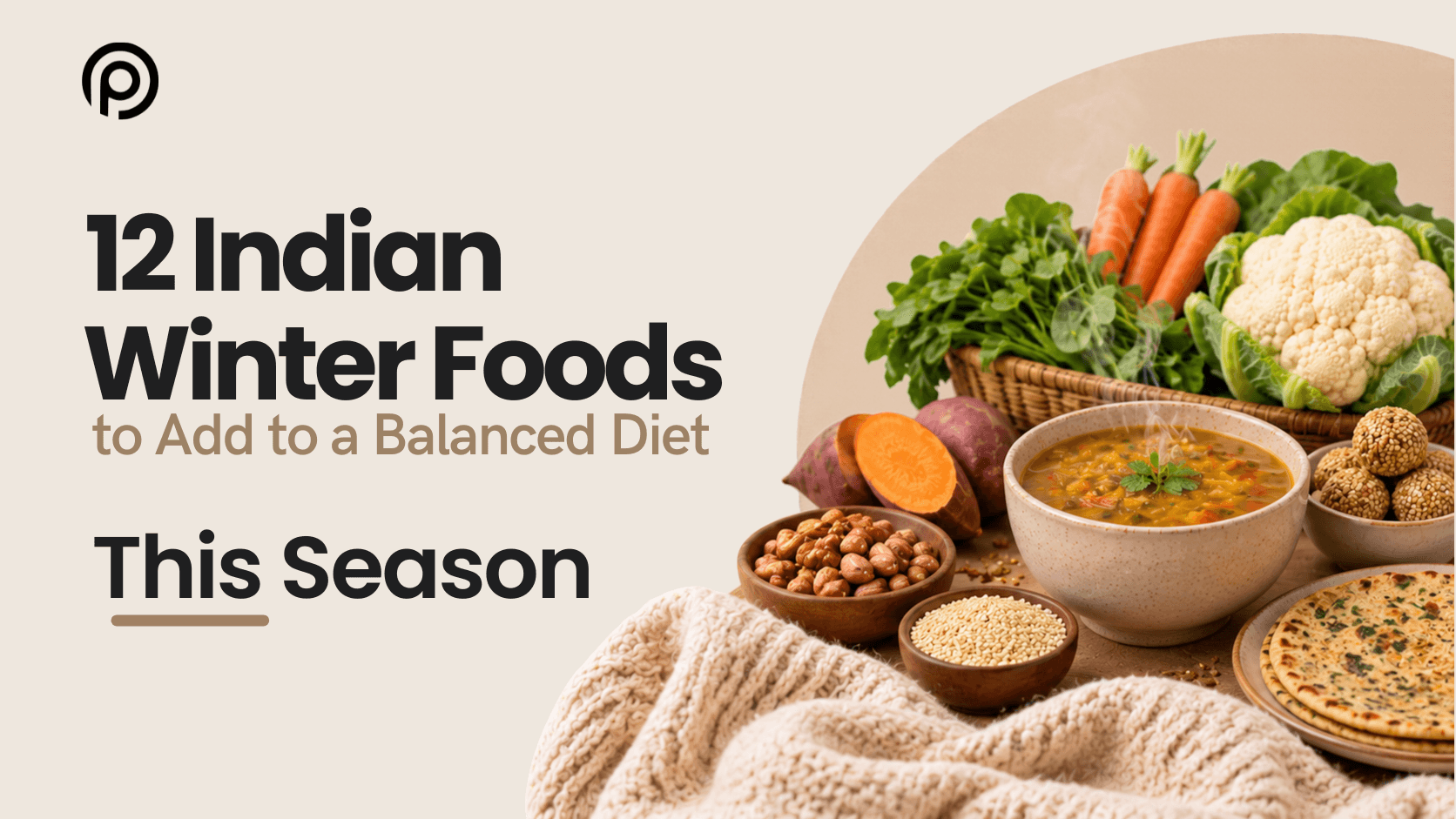
12 Indian Winter Foods to Add to a Balanced Diet This Season
Winter is a wonderful time to enjoy fresh, seasonal produce. Across India, colder months bring a variety of vegetables, leafy greens, fruits, grains and traditional foods that can add colour, flavour and nutritional value to everyday meals.
From fresh carrots and green peas to mustard greens, bathua, sweet potatoes and seasonal citrus fruits, Indian winter foods offer plenty of options for building balanced and satisfying meals.
Eating seasonal foods can also make meal planning more interesting. Instead of relying on the same ingredients throughout the year, you can explore locally available produce and prepare different combinations of meals.
However, a healthy winter diet is not about eating only a few so-called superfoods. It is about including a variety of food groups, maintaining appropriate portions and choosing meals that suit your nutritional needs.
Here are 12 Indian winter foods worth adding to your balanced diet this season.
1. Carrots: A Colourful Source of Beta-Carotene
Carrots are among the most popular winter vegetables in India. They are versatile, naturally sweet and can be enjoyed in several forms.
They contain beta-carotene, which the body can convert into vitamin A. Vitamin A plays an important role in supporting normal vision, immune function and healthy skin.
How to include carrots in your diet:
- Add grated carrots to vegetable salads.
- Prepare carrot and vegetable soup.
- Include cooked carrots in mixed vegetable sabzis.
- Add carrots to pulao, khichdi or stuffed parathas.
- Enjoy homemade gajar halwa occasionally as part of a balanced eating pattern.
Carrots can be eaten raw or cooked. Including them in different preparations makes it easier to enjoy their nutritional benefits.
2. Spinach: A Nutrient-Rich Leafy Green
Spinach, commonly known as palak, is a widely available leafy green during winter.
It provides folate, vitamin K, vitamin C and non-haem iron, along with fibre and other plant compounds.
Folate supports normal cell division, while vitamin K plays a role in blood clotting and bone health.
How to include spinach in your diet:
- Prepare palak dal.
- Add spinach to vegetable soups.
- Make palak paneer.
- Include chopped spinach in omelettes or besan chilla.
- Add spinach to parathas and savoury pancakes.
Combining spinach with vitamin C-rich foods such as lemon, amla or tomatoes can help improve the absorption of plant-based iron.
3. Methi: A Traditional Winter Green
Fresh fenugreek leaves, commonly called methi, are a familiar ingredient in Indian winter cooking.
Methi leaves provide fibre, folate, vitamin K and several other nutrients. Their slightly bitter flavour also adds variety to everyday meals.
How to include methi in your diet:
- Prepare methi thepla.
- Add fresh leaves to dal and vegetable preparations.
- Make methi paratha.
- Combine methi with potatoes or peas.
- Add chopped methi to besan chilla.
Methi can be combined with whole grains, pulses, curd or other protein sources to create a more balanced meal.
4. Sarson Ka Saag: A Traditional Winter Favourite
Mustard greens, popularly known as sarson, are an important part of traditional North Indian winter meals.
They contain fibre, vitamin K, vitamin C and carotenoids. Their rich nutritional profile makes them a useful addition to a varied diet.
Sarson ka saag is traditionally prepared with other leafy greens and spices, often served with makki ki roti.
How to include mustard greens in your diet:
- Prepare homemade sarson ka saag.
- Combine mustard greens with spinach or bathua.
- Add finely chopped leaves to mixed vegetable dishes.
- Pair saag with makki ki roti and a suitable protein source.
For a balanced meal, consider adding curd, dal or another protein-rich food alongside your traditional saag preparation.
5. Bathua: A Seasonal Leafy Vegetable
Bathua is another popular winter green commonly used in Indian households.
It provides fibre and several micronutrients, including folate and vitamin C. Its mild, earthy flavour makes it suitable for traditional recipes.
How to include bathua in your diet:
- Prepare bathua raita.
- Make bathua parathas.
- Add it to mixed leafy vegetable preparations.
- Combine it with dal.
- Use it in homemade soups.
Thoroughly wash leafy vegetables before cooking to remove soil and other impurities.
6. Green Peas: A Plant-Based Source of Protein and Fibre
Green peas are a popular winter ingredient in Indian cooking. They add natural sweetness, colour and texture to different dishes.
Unlike many other vegetables, green peas also provide a useful amount of plant-based protein, along with fibre, folate and vitamin C.
How to include green peas in your diet:
- Add peas to vegetable pulao.
- Prepare matar paneer.
- Include them in homemade vegetable soups.
- Add peas to poha and upma.
- Prepare mixed vegetable sabzi with peas and carrots.
Combining green peas with whole grains, dairy or other protein sources can help create satisfying meals.
7. Sweet Potatoes: A Fibre-Rich Winter Food
Sweet potatoes are naturally sweet and can be prepared in both savoury and simple snack recipes.
They provide complex carbohydrates, fibre, potassium and beta-carotene, particularly in orange-fleshed varieties.
Their carbohydrate and fibre content makes them a useful addition to meals and snacks.
How to include sweet potatoes in your diet:
- Enjoy boiled or roasted sweet potatoes.
- Add them to vegetable chaat.
- Prepare sweet potato tikki with minimal oil.
- Include them in mixed vegetable dishes.
- Pair them with curd, roasted chana or another protein source.
The cooking method and portion size matter. Prefer boiled, steamed or roasted preparations over deep-fried versions for everyday meals.
8. Radish: A Refreshing Source of Fibre
Radish, known as mooli, is commonly available during the Indian winter season.
It contains water, fibre, vitamin C and other plant compounds. Both the root and leaves can be used in different recipes.
How to include radish in your diet:
- Prepare mooli paratha.
- Add sliced radish to salads.
- Make mooli sabzi.
- Include radish leaves in cooked vegetable preparations.
- Add radish to homemade soups.
If raw radish causes digestive discomfort, try eating it in cooked preparations instead.
9. Turnips: A Versatile Seasonal Vegetable
Turnips, commonly called shalgam, are another nutritious winter vegetable.
They provide fibre, vitamin C and several other micronutrients. Their mild flavour makes them suitable for soups, curries and mixed vegetable preparations.
How to include turnips in your diet:
- Prepare shalgam sabzi.
- Add turnips to vegetable soups.
- Combine them with carrots and peas.
- Prepare homemade turnip curry.
- Add cooked turnips to mixed vegetable meals.
Using turnips alongside other seasonal vegetables is an easy way to increase variety in your meals.
10. Amla: A Vitamin C-Rich Winter Fruit
Indian gooseberry, commonly known as amla, is a seasonal fruit valued for its vitamin C content.
Vitamin C supports normal immune function, collagen formation and the absorption of non-haem iron from plant foods.
Amla also contains various plant compounds that contribute to its nutritional profile.
How to include amla in your diet:
- Eat fresh amla in suitable portions.
- Add grated amla to salads.
- Prepare homemade amla chutney.
- Include small amounts in seasonal fruit preparations.
- Combine it with other fruits for a refreshing snack.
Fresh amla is generally preferable to heavily sweetened commercial preparations. Individuals with specific dietary restrictions should consider their overall food intake when choosing preserved products.
11. Bajra: A Traditional Winter Millet
Pearl millet, popularly known as bajra, is an important traditional grain in several parts of India.
It provides complex carbohydrates, fibre, plant-based protein, magnesium and iron.
Bajra is naturally gluten-free, making it an option for people who need to avoid gluten, provided there is no cross-contamination during processing.
How to include bajra in your diet:
- Prepare traditional bajra roti.
- Make bajra khichdi.
- Try bajra vegetable porridge.
- Combine bajra flour with other whole-grain flours.
- Enjoy bajra roti with dal, saag or vegetable curry.
Bajra can contribute to a balanced diet when paired with vegetables and protein-rich foods.
12. Nuts and Seeds: Small Foods with Nutritional Value
Winter is also a popular time to enjoy nuts and seeds such as almonds, walnuts, sesame seeds, flaxseeds and pumpkin seeds.
These foods provide healthy unsaturated fats, fibre, plant-based protein and minerals.
For example, walnuts provide omega-3 fatty acids in the form of ALA, while sesame seeds provide calcium, magnesium and other minerals.
How to include nuts and seeds in your diet:
- Add almonds and walnuts to breakfast.
- Sprinkle flaxseeds over curd or oats.
- Include sesame seeds in homemade chutneys.
- Add pumpkin seeds to salads.
- Use small quantities of nuts in homemade snacks.
Although nutritious, nuts and seeds are energy-dense. Portion awareness is important, particularly when managing overall calorie intake.
How to Build a Balanced Indian Winter Meal
Including seasonal winter foods is a good starting point, but a balanced meal should provide a combination of carbohydrates, protein, fibre and healthy fats.
Here are some practical meal combinations using Indian winter ingredients.
| MealBalanced food combination | |
| Breakfast | Methi paratha with curd |
| Mid-morning snack | Fresh amla or seasonal fruit |
| Lunch | Bajra roti, dal, sarson ka saag and salad |
| Evening snack | Roasted sweet potato with curd |
| Dinner | Vegetable khichdi with spinach and green peas |
| Optional snack | Almonds, walnuts or roasted chana |
These are examples rather than fixed meal plans. Food quantities should depend on individual energy requirements, activity levels, health conditions and personal preferences.
Common Mistakes to Avoid While Eating Winter Foods
Even nutritious seasonal foods should be consumed as part of an overall balanced eating pattern.
Here are some common mistakes to avoid:
1. Depending on only one or two vegetables
Eating spinach or carrots every day does not provide the same variety as including different vegetables, fruits, legumes and grains.
Try rotating seasonal produce throughout the week.
2. Overusing ghee, butter and oil
Traditional winter foods such as parathas, halwa and rich curries can contain substantial amounts of added fat.
Enjoy these foods while being mindful of preparation methods and portions.
3. Ignoring protein intake
A meal containing only roti and vegetables may not provide enough protein for some individuals.
Include dal, beans, chickpeas, paneer, curd, tofu, eggs, fish or chicken according to your dietary preferences.
4. Eating too few fruits and vegetables
Colder weather may reduce the desire to eat fresh salads and fruits, but that does not mean they should be avoided.
Include seasonal fruits and vegetables in suitable raw or cooked forms.
5. Treating traditional foods as automatic health foods
A food's nutritional value depends on its ingredients, preparation, portion size and overall dietary context.
For example, bajra roti can be nutritious, but a meal still needs adequate protein and vegetables.
Simple Tips to Make Your Winter Diet Healthier
You do not need to make complicated changes to improve your winter eating habits.
Try these practical ideas:
- Choose locally available seasonal vegetables and fruits.
- Include at least two different vegetable varieties across your main meals.
- Rotate leafy greens such as spinach, methi, bathua and mustard greens.
- Include a protein source in your main meals.
- Choose whole grains and millets according to your nutritional needs.
- Use nuts and seeds in moderate portions.
- Prefer homemade soups, dals and vegetable preparations.
- Maintain adequate water intake even when you feel less thirsty.
- Continue regular physical activity throughout the winter season.
Small, consistent changes can make healthy eating more practical and sustainable.
Frequently Asked Questions (FAQs)
1. Which Indian foods are best to eat during winter?
Carrots, spinach, methi, mustard greens, bathua, green peas, sweet potatoes, radish, turnips, amla, bajra and nuts are useful seasonal options. The best choices depend on availability, dietary preferences and individual nutritional requirements.
2. Are seasonal winter vegetables healthier than other vegetables?
Seasonal vegetables are often fresh, locally available and economical during their growing season. However, vegetables available throughout the year can also contribute valuable nutrients. Variety matters more than focusing exclusively on seasonal produce.
3. Can I eat bajra every day during winter?
Bajra can be included regularly if it suits your dietary needs and digestion. However, it is better to rotate grains such as wheat, rice, jowar, ragi and other millets to maintain variety.
4. Which winter foods are good sources of plant-based protein?
Green peas, lentils, chickpeas, beans, soy products, nuts and seeds provide plant-based protein. Bajra and other whole grains also contribute smaller amounts of protein.
5. Are nuts and seeds necessary in a winter diet?
Nuts and seeds are not compulsory, but they can contribute healthy fats, fibre, protein and minerals. Choose portions according to your energy requirements and dietary preferences.
6. How can I maintain a balanced diet during winter?
Include seasonal fruits and vegetables, whole grains, protein-rich foods and healthy fats. Maintain regular meal timings, stay hydrated and remain physically active.
Conclusion
Indian winters bring an excellent variety of seasonal foods that can make everyday meals nutritious, colourful and enjoyable.
From leafy greens and root vegetables to fruits, millets, legumes, nuts and seeds, these 12 food choices offer several ways to add variety to your diet.
Remember that no single food can provide everything your body needs. A balanced eating pattern, appropriate portions and consistency are more important than depending on individual superfoods.
Choose seasonal ingredients, experiment with traditional Indian recipes and build meals that support your everyday nutritional needs.
Build a healthier winter routine with PaybyCal and make balanced eating a part of your everyday lifestyle.
Download the application now
https://paybycal.com/download.html
- healthy winter foods India
- winter vegetables India
- seasonal foods India
- Indian winter diet
- winter nutrition
- healthy eating
This article is for general education and is not medical advice. Please consult a qualified healthcare professional about your individual needs.