
Healthy Lifestyle10 min read
Water Fasting for Weight Loss: What Actually Happens to Your Body?
Understand why body weight changes during water fasting and why sustainable weight management requires more than fasting alone.
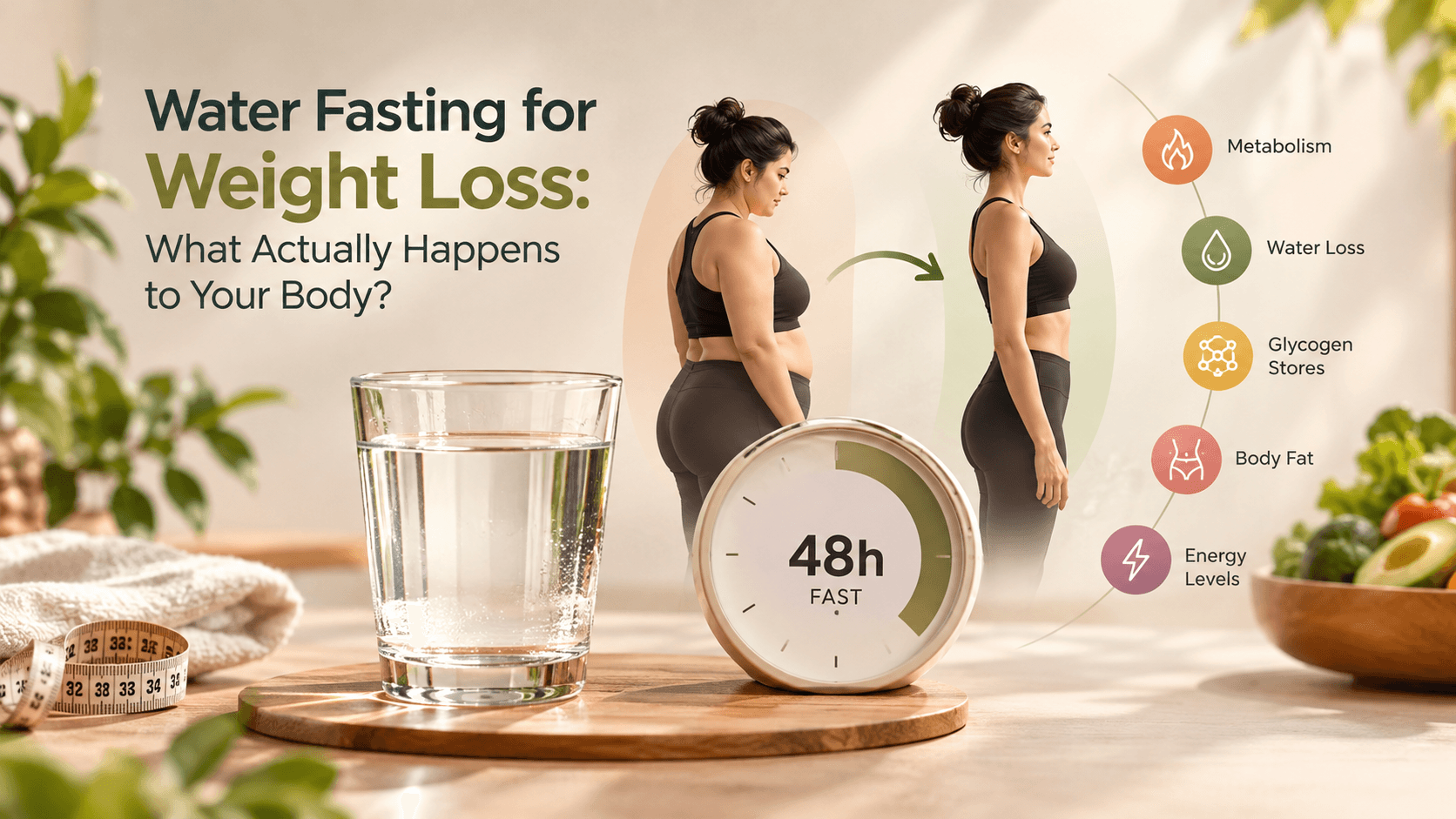
Water fasting is a practice in which a person consumes water but avoids food and other sources of calories for a specific period. Some people explore water fasting because they believe it may help them lose weight quickly. However, the changes that occur during fasting are more complex than simply burning body fat.
When food intake stops, the body begins using its stored energy to support essential functions. The amount of weight lost during this period can depend on several factors, including initial body weight, activity level, hydration, energy requirements and the duration of the fast.
It is important to understand that a decrease in body weight does not necessarily mean an equivalent amount of body fat has been lost. Water balance, stored carbohydrates and the contents of the digestive system also influence the number displayed on the weighing scale.
Understanding these changes can help people make more informed decisions about weight management and avoid unrealistic expectations about rapid weight loss.
1. What Happens to Your Body When You Start Water Fasting?
When you eat regularly, your body obtains energy from carbohydrates, fats and proteins. After a meal, some of the energy from carbohydrates is stored as glycogen in the liver and muscles. The body uses these energy reserves between meals and during periods when food is unavailable.
During water fasting, no new calories are consumed, so the body gradually adjusts how it supplies energy.
Initially, the body relies significantly on available glucose and stored glycogen. As fasting continues, glycogen stores decline, and the body increasingly relies on stored fat and produces more ketones for energy. The timing and extent of these changes vary from person to person.
Although these metabolic adjustments are part of the body's response to fasting, they do not automatically make water fasting the most effective or safest approach to losing weight.
2. Why Does Body Weight Drop Quickly During Water Fasting?
One reason people notice a rapid change on the scale during fasting is that several components of body weight change at the same time.
Water weight
Glycogen is stored alongside water in the body. As glycogen stores decrease, some of this associated water is released and eliminated. Changes in sodium intake and fluid balance can also influence how much water the body retains.
As a result, the initial reduction in body weight during fasting may partly reflect water loss rather than fat loss alone.
Reduced glycogen stores
Glycogen provides an accessible source of energy, particularly when the body needs glucose. When food intake stops, the body uses stored glycogen to help maintain energy availability.
As these reserves decrease, body weight can decline. However, glycogen stores can be replenished when a person resumes eating carbohydrates, which may cause some weight to return.
Less food in the digestive system
Food and fluids contribute to the total weight inside the digestive tract. When a person stops eating, the amount of food moving through the digestive system gradually changes.
This can contribute to a lower number on the scale, but it does not represent the loss of an equivalent amount of body fat.
Changes in body fat
When the body receives less energy than it requires, it can use stored fat to help meet its energy needs. However, the body may also break down protein and other tissues, particularly during prolonged periods without adequate nutrition.
The proportion of weight lost from water, fat and lean tissue varies. Therefore, rapid weight reduction during a water fast should not be interpreted as pure fat loss.
3. Does Water Fasting Actually Burn Body Fat?
Yes, the body can use stored fat for energy during water fasting. However, the amount of fat lost depends on the overall energy deficit, individual physiology and other factors.
A calorie deficit occurs when the body uses more energy than it receives from food and drink. During a water fast, calorie intake is effectively eliminated, creating a substantial energy deficit.
Nevertheless, the body does not obtain all its energy exclusively from fat. It also uses carbohydrates stored as glycogen and may break down protein. Energy expenditure and metabolic responses can change as fasting continues.
It is also important to distinguish between using fat for energy during a fast and achieving lasting body-fat reduction. Long-term changes depend on eating patterns and energy balance over time, not simply on how long a person goes without food.
For many people, a moderate, sustainable calorie deficit supported by balanced nutrition and regular physical activity is a more practical approach to managing body weight.
4. How Does Water Fasting Affect Metabolism?
Metabolism refers to the chemical processes through which the body converts nutrients into energy and maintains essential functions.
During fasting, the body adjusts its energy use to cope with the absence of incoming calories. Several changes may occur:
- Increased use of stored energy: The body uses available glycogen and increasingly relies on fat and ketones as fasting continues.
- Changes in insulin levels: Insulin levels generally decline when a person is not eating, supporting changes in how the body stores and uses energy.
- Changes in energy expenditure: The body's energy requirements may change with reduced food intake, changes in activity and adaptations to prolonged energy restriction.
- Greater reliance on fat oxidation: The body increases its use of fat for energy, although this does not mean that every calorie deficit produces the same amount of body-fat loss.
These responses are part of normal human physiology. However, claims that water fasting permanently boosts metabolism or guarantees faster long-term weight loss are not supported by sufficient evidence.
Prolonged fasting can also cause fatigue, dizziness, dehydration, electrolyte disturbances and other complications. The risks can be greater for people with certain medical conditions or those taking medications that affect blood sugar, blood pressure or fluid balance.
5. Why Can Weight Return After a Water Fast?
It can be frustrating to see body weight increase after ending a fast, especially after experiencing a rapid decrease. However, some weight regain is an expected response to resuming normal food intake.
When a person starts eating again, several changes occur:
- Glycogen stores begin to replenish.
- Water associated with glycogen storage returns.
- Food and fluids increase the contents of the digestive system.
- Sodium and carbohydrate intake influence fluid balance.
These changes can increase body weight without indicating that the same amount of body fat has been regained.
Actual fat gain depends on factors such as overall energy intake and expenditure over time. This is why evaluating weight trends over several weeks is generally more informative than comparing a single measurement before and after fasting.
Following a prolonged fast, reintroducing food requires particular care. People who have undergone extended food deprivation or are at risk of malnutrition may develop serious electrolyte and metabolic complications when eating resumes. Medical guidance is important in these circumstances.
6. Is Water Fasting a Sustainable Weight-Loss Strategy?
Water fasting may produce short-term weight changes, but it can be difficult to sustain and may not support the nutritional needs required for long-term health.
The main challenge is that weight management involves more than temporarily reducing food intake. People need an eating pattern that provides adequate energy, protein, vitamins, minerals and other essential nutrients.
A sustainable approach can include the following habits.
Eat balanced, nutrient-rich meals
Include vegetables, fruits, whole grains, pulses, appropriate protein sources and healthy fats. A balanced eating pattern can help provide essential nutrients while supporting fullness and energy levels.
For Indian diets, practical choices may include dal, beans, curd, eggs, tofu, paneer, seasonal vegetables, whole-wheat roti and appropriately portioned rice, depending on individual preferences and nutritional needs.
Maintain adequate protein intake
Protein supports muscle maintenance, tissue repair and several essential body functions. During weight loss, consuming adequate protein alongside appropriate physical activity can help preserve lean body mass.
Protein requirements vary according to age, activity level, body size and health status. People with kidney disease or other relevant conditions may require individualized advice.
Include regular physical activity
Walking, cycling, swimming and other aerobic activities support cardiovascular health. Resistance training can help maintain muscle strength and function.
Combining different forms of physical activity can support overall health without relying on extreme dietary restrictions.
Prioritize sleep and stress management
Sleep and stress can influence appetite, energy, motivation and daily routines. Establishing regular sleep habits and finding practical ways to manage stress may make healthy eating and physical activity easier to maintain.
Focus on consistency instead of rapid results
Gradual changes are often easier to maintain than restrictive approaches that are difficult to follow. Consistent meals, regular activity and realistic goals can help build a routine that fits everyday life.
7. Who Should Be Careful About Water Fasting?
Water fasting is not appropriate for everyone. Going without food can create additional risks for people with existing health conditions or increased nutritional needs.
Extra caution is particularly important for:
- People with diabetes or blood sugar regulation problems.
- People with kidney, liver or cardiovascular conditions.
- People who take medications that require food or affect blood pressure, blood sugar or fluid balance.
- Pregnant or breastfeeding individuals.
- Children, adolescents and people who are underweight or malnourished.
- People with a current or previous eating disorder.
Prolonged fasting can increase the risk of dehydration, electrolyte imbalances, fainting and other serious complications. Drinking water alone does not prevent every risk associated with fasting.
Anyone considering an extended fast should consult a qualified healthcare professional, particularly if they have a medical condition or take regular medication. Fasting should not be treated as a substitute for individualized medical or nutritional care.
8. How Can Tracking Help With Sustainable Weight Management?
Weight management becomes easier to evaluate when people look beyond a single number on the scale. Tracking everyday habits can help identify patterns, measure consistency and support more informed decisions.
With a health-tracking platform such as PayByCal, users can organize relevant information about their routines and review their progress over time.
Useful habits to monitor include:
- Fasting schedules: Record fasting periods if fasting is part of a professionally appropriate routine.
- Food intake: Review meal patterns and nutritional choices to identify opportunities for improvement.
- Daily steps: Monitor movement and gradually work toward realistic activity goals.
- Body measurements: Track changes in measurements over time, recognizing that they can fluctuate.
- Body weight: Compare measurements taken under consistent conditions rather than relying on daily fluctuations.
- Personal consistency: Review how regularly healthy habits are followed and which routines are easiest to maintain.
Tracking is most useful when the information supports practical decisions rather than creating pressure to achieve rapid results. A temporary increase in weight or a missed activity goal does not mean that progress has failed.
PayByCal can help users bring relevant health habits together in one place, making it easier to focus on the bigger picture of their routine.
9. Water Fasting vs. Sustainable Weight Management
Water fasting and sustainable weight management differ in their approach, nutritional implications and long-term practicality.
| Factor | Water fasting | Sustainable weight management |
| Food intake | Temporarily excludes calories | Includes an individualized, balanced eating pattern |
| Initial weight change | May be rapid, partly due to water loss | Often more gradual |
| Body-fat reduction | Can occur, but weight loss may also include lean tissue and water | Can be supported through a sustainable energy deficit and adequate nutrition |
| Nutritional intake | Does not provide dietary nutrients during the fast | Designed to provide essential nutrients |
| Daily routine | May interfere with energy, concentration or activity | Can be adapted to everyday responsibilities |
| Long-term approach | May be difficult or risky to maintain | Emphasizes consistent, manageable habits |
Neither the weighing scale nor the duration of a fast tells the complete story of a person's health. Individual circumstances, nutritional needs and medical considerations should guide decisions about weight management.
10. Common Myths About Water Fasting for Weight Loss
Myth 1: Every kilogram lost during fasting is body fat
Fact: Weight changes can reflect water, glycogen, digestive contents, body fat and lean tissue. The scale cannot identify how much of each component has changed.
Myth 2: Longer fasts always produce better results
Fact: A longer fast creates additional nutritional and medical risks. More time without food does not automatically translate into better long-term weight management.
Myth 3: Weight regained after fasting always means fat gain
Fact: Some weight returns as glycogen stores replenish, water balance changes and normal food intake resumes. These changes do not necessarily represent fat gain.
Myth 4: Water fasting permanently increases metabolism
Fact: The body adapts to changes in energy availability. There is no guarantee that fasting will produce a lasting increase in metabolic rate.
Myth 5: Fasting alone is enough to maintain weight loss
Fact: Long-term outcomes depend on eating habits, physical activity, sleep, individual circumstances and the ability to maintain healthy routines over time.
Conclusion: Look Beyond the Number on the Scale
Water fasting can cause noticeable changes in body weight because the body adjusts its use of stored energy, glycogen and water when food intake stops. Some body fat may be used for energy, but the amount of weight lost is not equivalent to the amount of fat lost.
The most important consideration is what happens beyond the fasting period. Sustainable weight management requires adequate nutrition, regular physical activity, sufficient sleep and habits that can be maintained over time.
Rather than chasing rapid changes, focus on understanding your body's needs and measuring progress in a balanced way. Monitoring food choices, activity, body measurements and weight trends can provide a more complete picture than relying on fasting duration alone.
PayByCal encourages a more organized approach to health tracking, helping users monitor relevant habits and build greater consistency in their everyday routines. Remember that water fasting carries potential risks, particularly when prolonged, and is not necessary for achieving sustainable weight-management goals.
- Water fasting weight loss
- fasting for weight loss
- fat loss
- calorie deficit
- metabolism
This article is for general education and is not medical advice. Please consult a qualified healthcare professional about your individual needs.