Healthy Lifestyle11 min read
24-Hour Water Fast: What to Expect Before You Try It
Thinking about a 24-hour fast? Learn how it works, what you may experience and when professional guidance may be important.
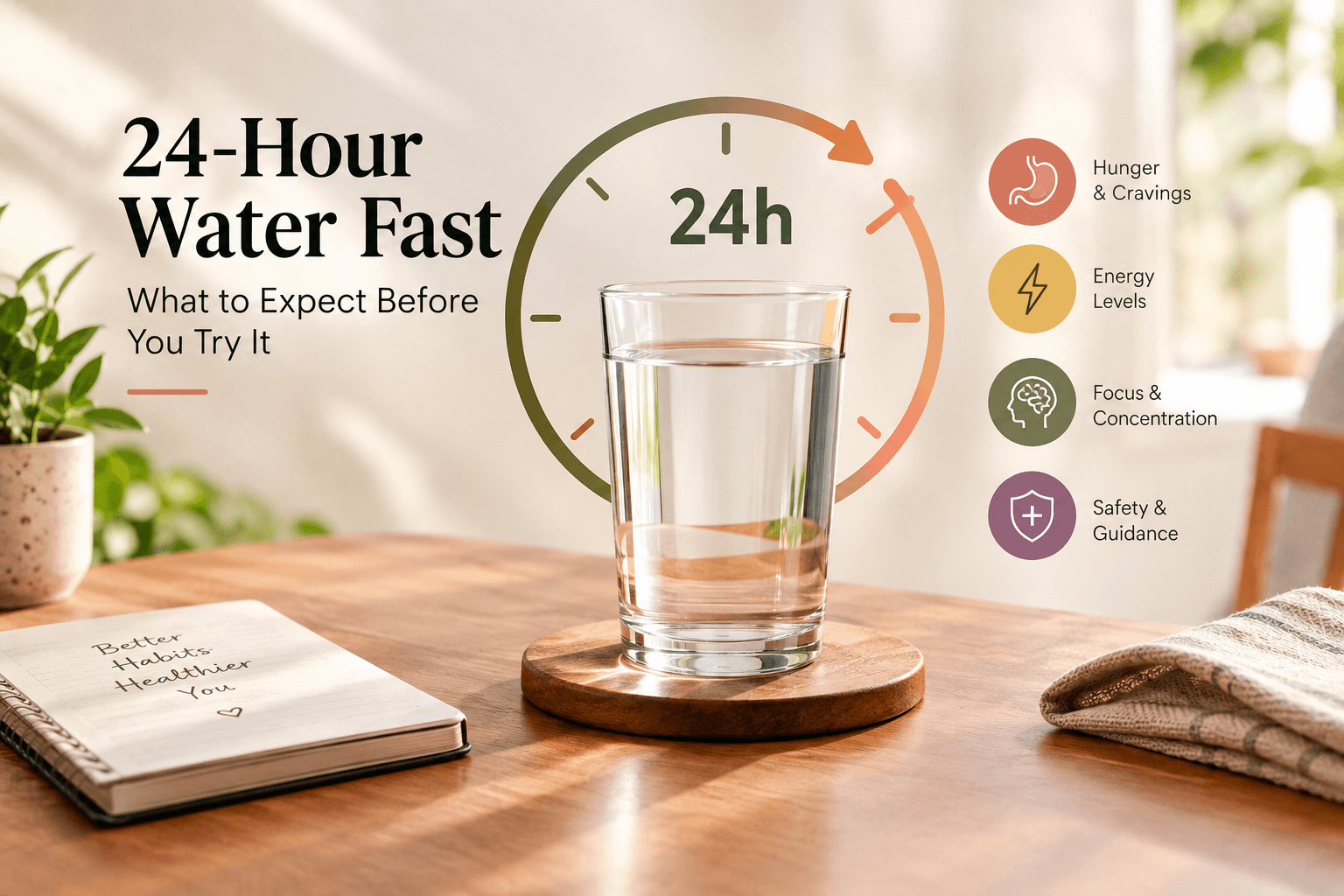
24-Hour Water Fast: What to Expect Before You Try It
Introduction
A 24-hour water fast is a form of fasting in which a person avoids calorie-containing foods and beverages for approximately one full day while drinking water. Some people explore this approach to understand their eating habits, establish a structured fasting routine, or learn more about how the body responds when food intake is paused for an extended period.
Although a 24-hour fast may sound straightforward, the experience can vary considerably from person to person. Hunger, energy levels, mood, concentration, and sleep may all be affected by factors such as daily activity, hydration, previous eating patterns, and overall health.
Before attempting a one-day water fast, it is important to understand what it involves, what you might experience, and why it is not suitable for everyone. Fasting should not be treated as a quick fix for weight loss or a requirement for maintaining good health. A balanced diet, regular physical activity, adequate sleep, and sustainable habits remain important foundations of overall well-being.
What Is a 24-Hour Water Fast?
A 24-hour water fast involves going approximately 24 hours without consuming foods or beverages that provide calories, while drinking water. For example, someone might finish dinner at 7 p.m. and avoid calorie-containing foods and drinks until 7 p.m. the following day.
Unlike shorter overnight fasting periods, a 24-hour fast extends across much of the following day. This means a person may experience hunger during normal meal times, changes in their usual routine, and challenges with work, exercise, or concentration.
The term water fasting specifically refers to consuming water without food during the fasting period. Beverages such as milk, juice, sweetened tea, and coffee with milk or sugar do not fit this definition because they provide calories. However, the most important consideration is not simply following a strict definition; it is understanding whether fasting is appropriate for your individual circumstances.
A 24-hour fast is also different from a medically supervised fasting procedure. People should not assume that because a fast lasts only one day, it is automatically safe.
What Happens to Your Body During a 24-Hour Fast?
The body continually adjusts how it obtains and uses energy. When food intake stops, several normal metabolic processes continue to operate and gradually change according to the body's energy requirements.
1. During the First Several Hours
After a meal, the body digests and absorbs nutrients from the food you have eaten. Glucose from carbohydrates can be used for immediate energy, while some energy is stored for later use.
As time passes after your last meal, insulin levels generally decrease, and the body begins relying more on stored energy. The exact timing depends on the meal, its carbohydrate content, your activity level, and individual metabolic differences.
You may not notice any significant changes during these early hours. Some people feel comfortable because they are accustomed to overnight fasting, while others may notice hunger when they usually eat breakfast or lunch.
2. Around Your Usual Meal Times
Hunger can become more noticeable when you skip meals that are normally part of your daily routine. You might experience stomach growling, thoughts about food, irritability, or a temporary reduction in concentration.
Hunger does not necessarily increase continuously throughout the day. For some people, it comes in waves and becomes less noticeable for a while. For others, it may remain uncomfortable.
Your previous eating habits, sleep quality, stress levels, and the amount of food consumed before fasting can influence how you feel. These experiences are not identical for everyone, and discomfort should not be viewed as something you must tolerate to complete the fast.
3. As the Fast Continues
As the body uses energy from recent meals and stored carbohydrate, it increasingly relies on stored energy reserves. The liver helps maintain blood glucose, while fat breakdown contributes more to the body's energy supply.
Ketone production may also increase as fasting continues. However, the degree of this change varies between individuals and depends on factors such as carbohydrate intake before fasting, physical activity, and metabolism.
It is important to understand that these processes do not guarantee a particular health outcome. Experiencing hunger, producing ketones, or completing a 24-hour fast does not automatically mean that you have achieved meaningful long-term fat loss or improved metabolic health.
Common Experiences During a 24-Hour Water Fast
People respond differently to fasting. Some may find the experience manageable, while others may experience symptoms that interfere with their normal activities.
Common experiences can include:
- Hunger and food cravings: You may feel hungry during your usual meal times or think about food more frequently.
- Changes in energy: Some people feel relatively normal, while others experience tiredness, weakness, or reduced stamina.
- Difficulty concentrating: You may find it harder to focus on demanding tasks, particularly if you are hungry, tired, or not feeling well.
- Headaches: Headaches can occur for several reasons, including caffeine withdrawal, dehydration, or changes in your usual routine.
- Mood changes: Irritability or changes in mood may occur when you are hungry or uncomfortable.
- Digestive changes: Your usual bowel movement pattern may change temporarily because you are not eating.
- Changes in exercise performance: Workouts may feel more difficult, particularly if you are accustomed to eating before physical activity.
These experiences are not necessary signs that fasting is working. You should not ignore symptoms simply to reach the 24-hour mark.
If you develop significant dizziness, shaking, confusion, faintness, severe weakness, or other concerning symptoms, stop fasting and seek appropriate medical advice. Severe symptoms, including fainting or confusion, require urgent medical attention.
Does a 24-Hour Water Fast Help With Weight Loss?
Weight loss is one reason some people consider a 24-hour water fast. When you do not consume calories during a fasting period, your total energy intake for that period is reduced. However, the effect on long-term weight depends on your overall eating pattern and energy balance over time.
The number on the weighing scale may decrease after a fast, but this does not necessarily represent an equivalent amount of body fat lost. Changes in stored carbohydrate, the water associated with it, hydration, and digestive contents can influence short-term body weight.
After the fast, some people compensate by eating more than usual, which may reduce or eliminate the calorie deficit created during fasting. Others may find that fasting disrupts their regular eating routine or leads to an unhealthy cycle of restriction and overeating.
For sustainable weight management, a balanced eating pattern that provides adequate protein, fibre, vitamins, minerals, and other essential nutrients is generally more useful than relying on occasional extended fasting. Regular movement, resistance training, sleep, and consistent habits also contribute to long-term progress.
A 24-hour fast is not necessary for weight loss, and it should not be used to compensate for overeating or to punish yourself for food choices.
How to Prepare Before Considering a 24-Hour Fast
If you are considering a 24-hour water fast, preparation should begin with understanding your health needs rather than simply selecting a start time.
Review Your Health and Medications
Speak with a qualified healthcare professional before attempting an extended fast, especially if you take medication or have an existing health condition. Some medicines need to be taken with food, and others may increase the risk of low blood sugar, dehydration, or changes in blood pressure during fasting.
Do not change medication doses or timing to accommodate a fast without professional advice.
Fasting may be inappropriate for people with diabetes, a history of eating disorders, certain kidney or liver conditions, or other medical concerns. It should generally be avoided during pregnancy and breastfeeding, and by children and adolescents. People who are underweight, medically frail, or recovering from an illness should also seek appropriate guidance.
Maintain Your Normal Hydration
Water is central to a water fast, but hydration needs differ according to body size, weather, activity, and health conditions. Drink water according to your needs rather than forcing excessive amounts.
Drinking too much water can also be dangerous because it can disturb the body's electrolyte balance. People with conditions requiring fluid restriction should follow their clinician's advice instead of increasing water intake independently.
Consider Your Daily Schedule
Fasting may be more difficult when you have a demanding workday, strenuous exercise, long travel, or activities requiring sustained concentration. Avoid treating a fasting target as more important than your ability to function safely.
If you are unsure how fasting may affect you, discuss the risks with a healthcare professional before attempting it rather than experimenting with longer fasting periods on your own.
Avoid an All-or-Nothing Mindset
You do not need to complete a full 24-hour fast to demonstrate discipline or make progress toward a health goal. If fasting is not suitable for you, regular balanced meals and consistent health habits remain valuable alternatives.
How to Break a 24-Hour Water Fast
After a period without food, it is sensible to return to eating in a comfortable and balanced way rather than immediately consuming a very large meal.
Consider the following general principles:
- Start with a moderate meal: Choose a meal that feels comfortable to digest and suits your normal dietary needs.
- Include balanced nutrients: A combination of protein, carbohydrates, vegetables or fruit, and healthy fats can help provide a range of nutrients.
- Eat slowly: Pay attention to hunger and fullness rather than rushing through a large meal.
- Continue drinking water normally: Maintain hydration according to your needs.
- Avoid compensatory eating: You do not need to reward yourself with an unusually large meal because you have completed a fast.
For most otherwise healthy adults, a single 24-hour fast does not automatically require a special refeeding protocol. However, people who are malnourished, have certain medical conditions, or have undertaken repeated or prolonged food restriction may need individualized medical guidance.
If you experience persistent nausea, severe abdominal pain, faintness, or other concerning symptoms after eating, seek medical advice.
Is a 24-Hour Water Fast Safe for Everyone?
No. Individual health circumstances can substantially change the risks associated with fasting.
People taking insulin or certain glucose-lowering medicines may develop dangerously low blood sugar. Those taking particular blood pressure medicines or diuretics may be more vulnerable to dehydration or changes in blood pressure. Other conditions can make changes in food or fluid intake unsafe.
Fasting can also affect people psychologically. For someone with a current or previous eating disorder, strict fasting rules may reinforce unhealthy patterns involving food restriction, guilt, or compensatory behaviour.
Before starting a 24-hour fast, seek professional medical guidance if you have a chronic condition, take prescription medication, have a history of disordered eating, or are uncertain whether fasting is appropriate for you.
Most importantly, do not interpret the ability to tolerate hunger as proof of good health. A safe and sustainable approach should support your overall well-being rather than require you to push through warning signs.
How a Fasting Tracker Can Help You Monitor Your Routine
For people who already have professional guidance and choose to follow a fasting routine, a fasting tracker can make it easier to record start times, end times, and patterns in daily habits.
A tracker can help you:
- Record your fasting window: Keep track of when a fasting period begins and ends.
- Maintain awareness of your routine: Compare fasting records with sleep, meals, activity, and daily schedules.
- Identify patterns: Notice whether certain schedules coincide with tiredness, hunger, or difficulty concentrating.
- Stay organized: Keep records in one place instead of relying on memory.
- Review your habits: Use your records to support informed conversations with a qualified healthcare professional.
A fasting tracker is a monitoring tool, not a medical safety system. It cannot determine whether fasting is appropriate for you, diagnose symptoms, or guarantee that a fasting period is safe.
With a health-tracking app such as PayByCal, users can explore ways to organize their health-related routines and monitor consistency. The goal should be to build awareness of everyday habits, not to encourage increasingly long fasts or to treat every completed fasting window as an achievement.
Frequently Asked Questions
1. Can beginners try a 24-hour water fast?
A 24-hour fast may be challenging for someone who has never fasted, and it is not necessary for improving health. Beginners should first consider their health circumstances and seek professional guidance, especially if they have medical conditions or take medication. A regular, balanced eating pattern may be a more appropriate choice.
2. Can I drink water during a 24-hour fast?
Yes. Water is part of a water fast. However, fluid requirements differ from person to person, and excessive water intake can be harmful. Anyone with a medical condition that affects fluid balance should follow professional guidance.
3. Will I lose body fat after one 24-hour fast?
A fast may create a short-term calorie deficit, but the amount of body fat lost cannot be reliably predicted from the fasting duration alone. Short-term scale changes may also reflect water, stored carbohydrate, and digestive contents. Long-term results depend on overall habits and energy balance.
4. What should I do if I feel dizzy during a fast?
Stop fasting if you feel dizzy or unwell. Sit or lie down somewhere safe, and seek appropriate medical advice. If you experience fainting, confusion, severe weakness, or other serious symptoms, obtain urgent medical care rather than attempting to complete the fast.
5. Can I exercise during a 24-hour water fast?
Exercise tolerance may decrease during fasting, and strenuous activity can increase the risk of dizziness, weakness, or dehydration. It is important not to push through symptoms. People with medical conditions or other risk factors should discuss activity and fasting with a healthcare professional.
6. Is a 24-hour water fast better than overnight fasting?
Not necessarily. A longer fasting period is not automatically more beneficial. The appropriate eating schedule depends on individual health, nutritional requirements, preferences, and goals. You do not need to fast for 24 hours to maintain a balanced lifestyle.
Conclusion
A 24-hour water fast involves going approximately one full day without calorie-containing foods or beverages while drinking water. During this period, the body adjusts how it uses stored energy, and individuals may experience hunger, changes in energy, headaches, or difficulty concentrating.
Although fasting is sometimes explored for weight management or routine building, a single 24-hour fast does not guarantee fat loss or improved health. Its suitability depends on personal circumstances, medical history, medications, and nutritional needs.
Before attempting an extended fast, understand the potential risks, seek professional guidance when appropriate, and prioritize your well-being over completing a specific duration. Balanced nutrition, regular activity, sufficient sleep, and sustainable habits remain essential parts of long-term health.
Tools such as PayByCal can help users organize health-related routines and monitor consistency, but tracking should support informed decisions rather than encourage unnecessary restriction. The most useful health routine is one that is appropriate for your needs and sustainable over time.
Download the application now
- 24 hour fast
- 24 hour water fasting
- one day fast
- fasting guide
This article is for general education and is not medical advice. Please consult a qualified healthcare professional about your individual needs.