
Healthy Lifestyle7 min read
7 Common Water Fasting Mistakes Beginners Should Avoid
From jumping into long fasts to ignoring health conditions, discover common fasting mistakes beginners make.
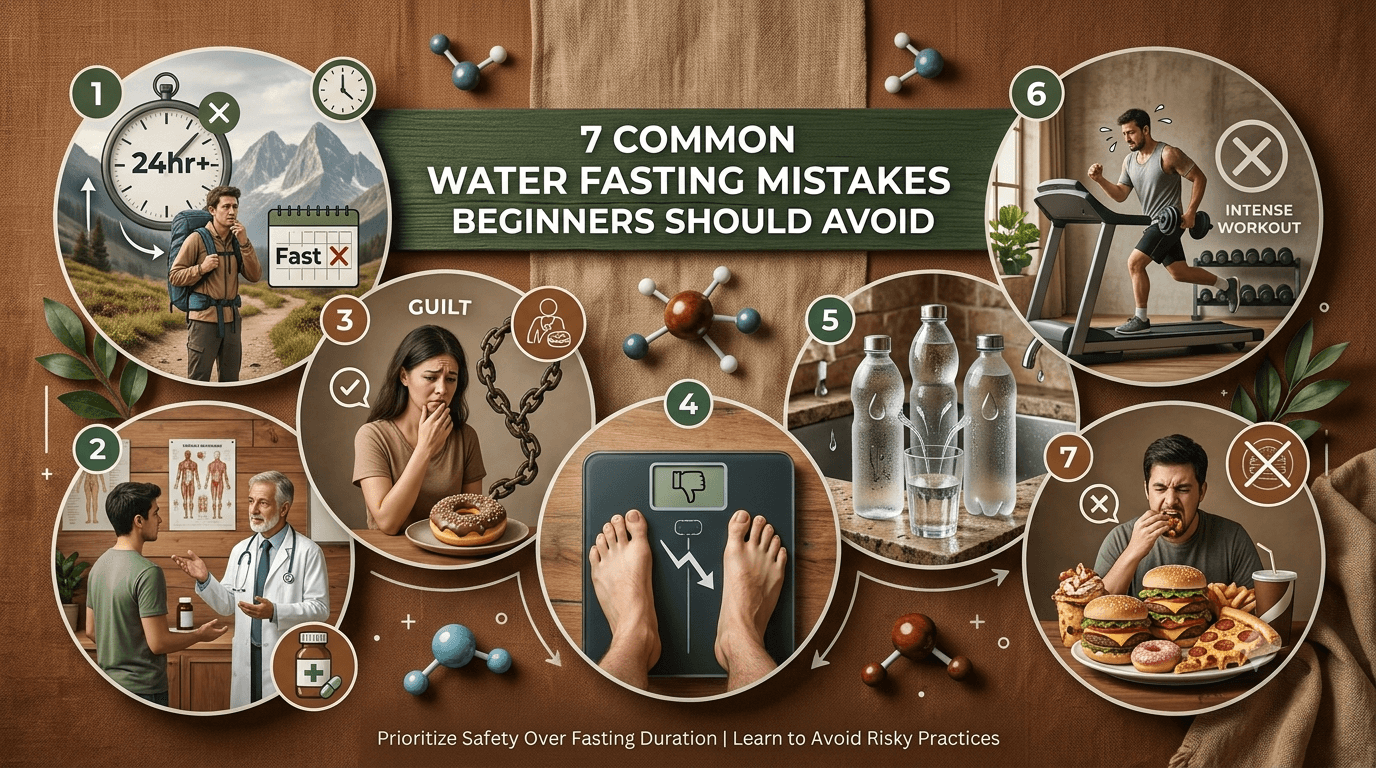
7 Common Water Fasting Mistakes Beginners Should Avoid
Why Understanding Fasting Mistakes Matters
Water fasting involves consuming only water for a specific period while avoiding food and other beverages. Although some people explore fasting for weight management or personal wellness, it is important to understand that water fasting is not suitable for everyone and can carry health risks, particularly when practiced for extended periods or without medical guidance.
Beginners often approach fasting with unrealistic expectations, incomplete information, or the belief that longer fasts produce better results. However, fasting for longer durations does not automatically lead to better health outcomes. Factors such as individual health conditions, medication use, nutritional status, and daily activity levels can influence how the body responds.
Understanding common water fasting mistakes can help people make more informed decisions about their health. Rather than treating fasting as a challenge or a competition, it is important to prioritize safety, realistic expectations, and sustainable health habits.
1. Starting With Long Fasts Without Preparation
One of the most common mistakes beginners make is attempting a 24-hour, 48-hour, or longer water fast without understanding the potential effects on the body. A sudden period without food may cause headaches, dizziness, weakness, irritability, difficulty concentrating, or other unpleasant symptoms.
Some beginners believe that completing a longer fast demonstrates greater discipline. However, the duration of a fast should never be used as a measure of success. Longer fasts can increase the risk of dehydration, electrolyte imbalances, low blood pressure, and other complications.
Before considering fasting, individuals should assess their health status and understand the risks involved. Extended water fasting should not be attempted without appropriate medical supervision. For many people, maintaining regular, balanced meals and establishing consistent eating habits may be a more practical approach to supporting overall health.
2. Ignoring Existing Medical Conditions and Medications
Another serious mistake is assuming that water fasting is safe for everyone. Certain medical conditions can make fasting particularly risky, and going without food may affect how some medications work or increase the likelihood of side effects.
People living with diabetes, kidney disease, or conditions that affect blood pressure or fluid balance should seek medical advice before considering fasting. Individuals taking insulin, blood glucose-lowering medicines, diuretics, or certain blood pressure medications may require specific clinical guidance.
Water fasting is generally inappropriate for children and teenagers, pregnant or breastfeeding individuals, people who are underweight or malnourished, and those with a current or previous eating disorder unless a qualified healthcare professional provides specific guidance.
It is also important not to stop, skip, or change prescribed medication simply to continue a fast. Discussing fasting plans with a healthcare professional can help identify potential risks and safer alternatives.
3. Treating Fasting as Punishment for Eating
Food is an essential source of energy and nutrients, but some people begin fasting because they feel guilty about eating certain foods, consuming more than planned, or missing a workout. Using fasting to compensate for eating can create an unhealthy relationship with food.
This pattern may encourage cycles of restriction, intense hunger, overeating, and guilt. Over time, it can make it more difficult to recognize hunger and fullness cues or maintain a balanced approach to nutrition.
Fasting should never be used as punishment for eating or as a way to make up for a particular meal. A more supportive approach involves returning to regular, balanced meals, choosing a variety of nutritious foods, and developing consistent habits without guilt.
If thoughts about food, body weight, or compensatory fasting become overwhelming, speaking with a qualified healthcare professional or registered dietitian can be helpful.
4. Expecting Unrealistic Weight Loss Results
Many beginners are attracted to water fasting because they expect rapid weight loss within a short period. Although the number on the weighing scale may decrease during fasting, this change does not represent body fat loss alone.
During the initial stages of food restriction, the body uses stored glycogen for energy. Glycogen is stored alongside water, so changes in glycogen levels can cause a noticeable reduction in body water. The absence of food in the digestive tract can also temporarily affect body weight.
As a result, some of the weight lost during a fast may return when normal eating resumes. This does not necessarily indicate failure; it reflects ordinary changes in fluid balance and digestive contents.
Sustainable weight management depends on several factors, including balanced nutrition, physical activity, sleep, stress management, and consistency over time. Rather than focusing on dramatic short-term changes, it is more useful to develop habits that support long-term health.
5. Misunderstanding Hydration and Drinking Too Much Water
Hydration is important during fasting, but drinking excessive amounts of water is not a safe solution to every fasting-related symptom. Some beginners drink large quantities of water in an attempt to suppress hunger or prevent all possible side effects.
Drinking too much water, particularly over a short period, can dilute sodium levels in the blood and cause a potentially dangerous condition called hyponatremia. At the same time, drinking too little water can contribute to dehydration, especially in hot weather or during physical activity.
Water needs vary according to individual circumstances, including climate, activity, body size, and health conditions. There is no single amount that is appropriate for everyone.
It is also important to recognize that water alone does not replace the electrolytes and nutrients normally obtained through food. If fasting causes persistent dizziness, weakness, confusion, vomiting, or other concerning symptoms, do not try to manage them simply by drinking more water. Stop the fast and seek appropriate medical advice. Severe confusion, fainting, seizures, or other emergency symptoms require urgent medical attention.
6. Continuing Intense Workouts During a Fast
Exercise is beneficial for many aspects of health, but combining intense physical activity with prolonged food restriction may increase the risk of fatigue, dizziness, dehydration, and reduced exercise performance.
Beginners sometimes continue demanding gym sessions, long-distance running, high-intensity workouts, or strenuous outdoor activities while fasting because they believe doing so will accelerate fat loss. However, exercising without adequate energy intake may make recovery more difficult and increase the likelihood of feeling unwell.
The body needs energy and nutrients to support muscle function, tissue repair, and recovery after exercise. Prolonged fasting can make it harder to meet these needs.
If someone is considering fasting, they should discuss exercise-related risks with a healthcare professional, particularly before attempting an extended fast. It is not advisable to push through weakness, dizziness, or unusual fatigue to complete a workout. Prioritizing recovery, adequate nutrition, and appropriate physical activity is generally a more sustainable strategy.
7. Overeating or Returning to Heavy Meals Immediately After Fasting
After a period without food, some people experience intense hunger and eat a very large meal as soon as the fast ends. This can lead to abdominal discomfort, bloating, nausea, and digestive distress.
Another concern is assuming that a large meal is necessary to compensate for all the food missed during fasting. Repeated cycles of prolonged restriction followed by overeating can make healthy eating habits more difficult to maintain.
After a short period of reduced food intake, returning to regular, balanced meals may be appropriate for many otherwise healthy people. However, after prolonged fasting or significant undernutrition, suddenly eating large amounts can cause dangerous electrolyte shifts associated with refeeding syndrome. Reintroducing food in these circumstances requires medical guidance.
Rather than planning a fast around how much food can be eaten afterward, it is better to focus on meeting nutritional needs consistently. Balanced meals containing appropriate sources of protein, carbohydrates, healthy fats, vitamins, and minerals can support overall well-being.
How to Approach Fasting More Responsibly
Avoiding common mistakes starts with understanding that water fasting is not a requirement for good health. Before considering any fasting routine, individuals should evaluate their personal health circumstances, review medication-related concerns with a healthcare professional, and understand the potential risks.
It is also helpful to separate health goals from short-term scale changes. Better energy levels, improved dietary consistency, adequate sleep, regular movement, and balanced nutrition can be meaningful goals without requiring prolonged food restriction.
Anyone who experiences fainting, confusion, chest pain, severe weakness, persistent vomiting, or other serious symptoms during fasting should stop and seek urgent medical care as appropriate.
Conclusion: Prioritize Safety Over Fasting Duration
Water fasting can appear straightforward, but going without food for extended periods can affect hydration, blood pressure, energy levels, and electrolyte balance. Beginners should avoid jumping into long fasts, ignoring medical conditions, using fasting to compensate for eating, expecting dramatic weight loss, mismanaging hydration, overexercising, or returning to food without considering the risks.
The most important principle is to avoid treating fasting duration as an achievement. A longer fast is not automatically healthier, and water fasting is not suitable for everyone.
For many people, consistent balanced meals, appropriate physical activity, sufficient sleep, and sustainable lifestyle habits provide a more practical foundation for long-term health. When considering fasting, informed decisions and professional medical guidance should always take priority over trends, online challenges, or unrealistic promises.
Download the application now
https://paybycal.com/download.html
- Fasting mistakes
- water fasting beginners
- fasting safety
This article is for general education and is not medical advice. Please consult a qualified healthcare professional about your individual needs.