Healthy Lifestyle10 min read
How to Eat During Festival Week Without Starting an Extreme Diet Afterwards
Festival week often brings sweets, rich meals, family gatherings and changes in daily routines. Learn how to enjoy festive foods without guilt, avoid extreme dieting afterwards and maintain a balanced approach to nutrition through mindful eating, hydration and simple everyday habits.
How to Eat During Festival Week Without Starting an Extreme Diet Afterwards
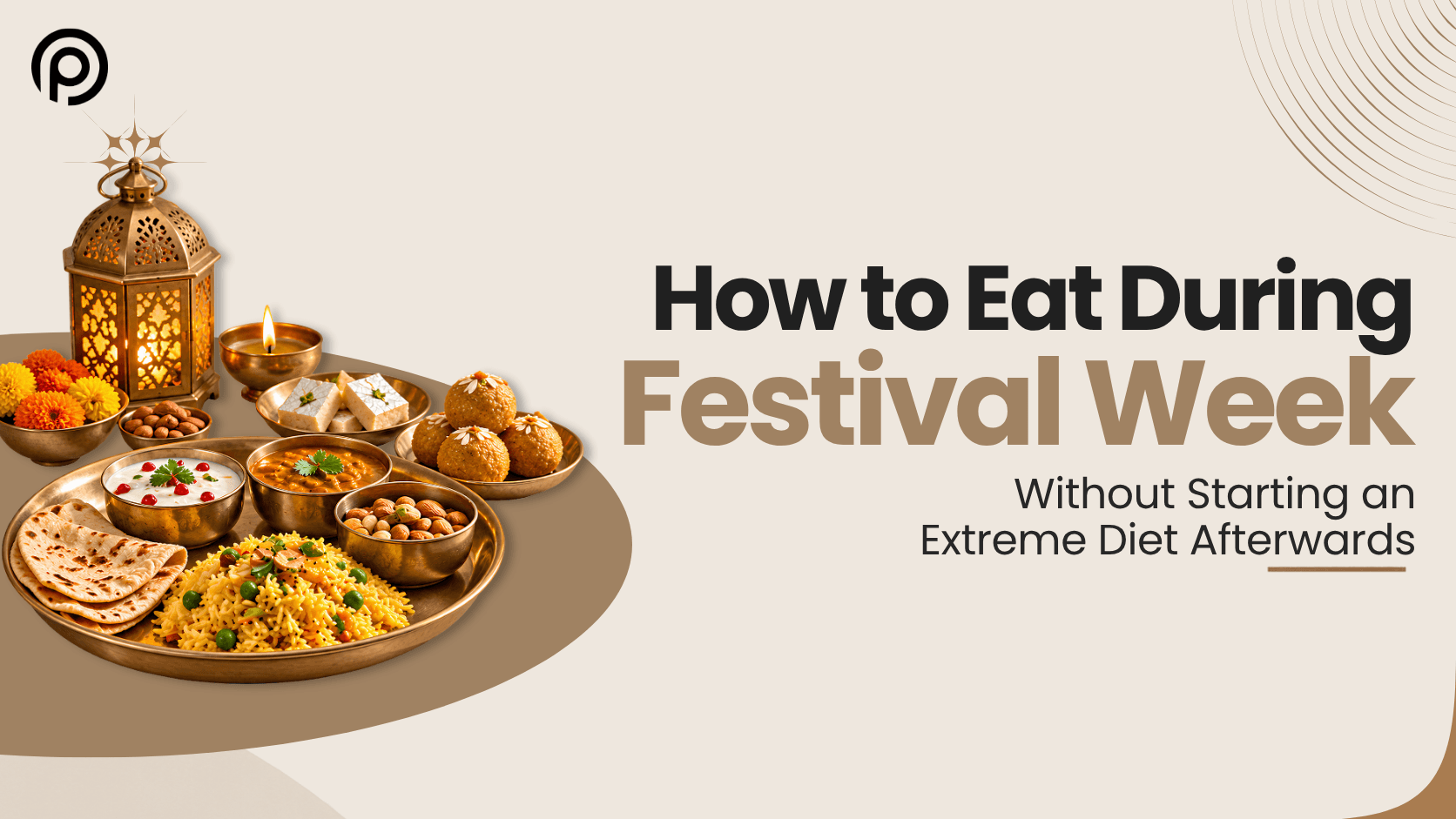
Festivals in India are closely connected with food, celebrations and spending time with family. From Diwali sweets and festive snacks to special dinners and family gatherings, food becomes an important part of almost every celebration. While enjoying these foods is completely normal, many people start worrying about weight gain, overeating and changes in their regular eating habits during festival week.
This often leads to an unhealthy cycle. People restrict their food intake before a festival, eat more than usual during celebrations and then feel the need to follow an extreme diet afterwards. Some skip meals, avoid carbohydrates or try excessive exercise to compensate for what they have eaten.
However, healthy eating does not mean avoiding your favourite festive foods. It means enjoying them while maintaining a reasonable balance. Instead of treating festival week as a break from healthy habits, you can make a few practical choices that allow you to celebrate without unnecessary food-related stress.
In this guide, we will explore how to eat mindfully during festival week, enjoy sweets without guilt and return to your regular routine without extreme dieting.
1. Avoid the All-or-Nothing Approach to Eating
One of the most common mistakes people make during festivals is thinking that they have either followed their diet perfectly or completely ruined it.
For example, someone following a weight-management plan may eat sweets at a Diwali gathering and immediately feel that their entire progress has been affected. This thinking can encourage overeating because they believe they have already gone off track.
Healthy eating should not be based on perfection. Having a few festive meals that are different from your usual routine does not mean you have failed.
Instead:
- Enjoy your favourite festive foods without unnecessary guilt.
- Continue eating regular meals throughout the day.
- Avoid skipping breakfast or lunch to save calories for dinner.
- Focus on your overall eating habits rather than one particular meal.
- Remember that consistency over time matters more than perfection every day.
A flexible approach makes it easier to maintain healthy habits even during celebrations.
2. Do Not Skip Meals Before a Festive Gathering
Many people deliberately skip meals before attending a festival party or family dinner because they want to eat more later. Although this may seem like a way to manage calorie intake, it can make you extremely hungry by the time you reach the gathering.
When you become very hungry, you may find it difficult to recognise fullness and make balanced food choices.
Instead of skipping meals, eat normally throughout the day.
For example:
- Breakfast: Vegetable poha, besan chilla or oats with curd.
- Lunch: Dal, roti, sabzi, curd and salad.
- Evening snack: Roasted chana, fruit or a handful of nuts.
- Dinner: Enjoy the festive meal while paying attention to hunger and fullness.
Eating regular meals helps you approach festive gatherings comfortably instead of feeling excessively hungry.
3. Enjoy Your Favourite Sweets Without Feeling Guilty
Indian festivals are incomplete for many people without traditional sweets. From ladoos and kaju katli to gulab jamun, rasgulla and barfi, festive desserts are an important part of celebrations.
You do not need to completely eliminate sweets to maintain a balanced diet.
The key is to enjoy them intentionally rather than eating automatically.
Some practical tips include:
- Choose the sweets you genuinely enjoy instead of tasting everything just because it is available.
- Serve yourself a portion rather than continuously eating directly from a sweet box.
- Eat slowly and pay attention to the taste and texture.
- Enjoy sweets after a balanced meal if that feels more satisfying.
- Avoid labelling foods as completely good or bad.
You can enjoy traditional festive foods while maintaining an overall balanced eating pattern. Remember, one serving of your favourite sweet does not undo your healthy habits.
4. Build Balanced Meals Even During Festival Week
Festive meals may include fried snacks, sweets, rich gravies and other calorie-dense foods. While these foods can be part of your celebrations, try to include different food groups throughout the day.
A balanced Indian meal generally includes:
Protein: Dal, paneer, curd, eggs, chicken, fish, chickpeas or rajma.
Fibre: Vegetables, fruits, salads, whole grains and legumes.
Carbohydrates: Roti, rice, poha, oats or other grain-based foods.
Healthy fats: Nuts, seeds and appropriate amounts of cooking oils.
For example, if your festive dinner includes puri and a rich potato curry, you can also include curd and a vegetable preparation to add variety to the meal.
You do not need to make every meal perfectly balanced. Simply try to include different food groups across your day.
5. Stay Hydrated Throughout the Day
During festival week, people often become busy with shopping, decorations, cooking, travelling and social gatherings. As a result, drinking enough water may become an afterthought.
Staying hydrated supports normal body functions and helps you manage your daily activities comfortably.
Try these simple habits:
- Start your morning with a glass of water.
- Keep a water bottle nearby while travelling or attending celebrations.
- Drink water regularly according to your thirst.
- Include water-rich foods such as cucumber, watermelon and oranges.
- Do not rely entirely on sugary drinks, packaged juices or sweetened beverages for hydration.
There is no need to force excessive amounts of water. Pay attention to your thirst and daily requirements.
6. Practise Mindful Eating at Parties and Family Gatherings
Festival gatherings often involve continuous access to food. Snacks may be served before dinner, followed by a main meal and several desserts.
When you are busy talking, socialising or watching celebrations, it is easy to eat more than you intended without noticing.
Mindful eating helps you become more aware of your food choices and eating patterns.
Here are a few ways to practise it:
- Take a moment to notice what foods are available before filling your plate.
- Choose the dishes you enjoy the most.
- Eat slowly instead of rushing through your meal.
- Avoid eating simply because food is being offered repeatedly.
- Pause during meals and notice whether you are still hungry.
- Enjoy conversations and celebrations instead of focusing only on food.
Mindful eating is not about controlling every bite. It is about enjoying your food while staying aware of your body's hunger and fullness signals.
7. Maintain Some Physical Activity During Festival Week
Festival week can make it difficult to follow your usual exercise schedule. You may have guests at home, attend family functions or spend more time travelling.
However, maintaining physical activity does not always require a structured gym workout.
Small activities throughout the day can help you stay active.
Some simple options include:
- Take a 10–15-minute walk after a meal if comfortable.
- Walk while shopping for festive essentials.
- Dance during celebrations.
- Help with household preparations and decorations.
- Use stairs whenever practical.
- Continue your regular workout whenever your schedule allows.
The aim is not to burn off the food you have eaten. Physical activity should support your overall health, fitness and well-being rather than become a punishment for enjoying festive meals.
8. Do Not Compensate for Festive Eating With Fasting or Crash Diets
After several days of celebrations, some people feel uncomfortable about their eating habits and immediately start looking for ways to compensate.
This may involve skipping meals, following restrictive detox plans, avoiding entire food groups or attempting prolonged fasting.
These approaches are unnecessary and may make it harder to maintain a healthy relationship with food.
Your body does not need an extreme diet to recover from a few festive meals.
Instead:
- Return to your regular meal timings.
- Include vegetables, fruits and protein-rich foods.
- Drink water according to your thirst.
- Get enough sleep.
- Resume comfortable physical activity.
- Avoid unnecessary calorie restrictions.
If your eating routine changes during festivals, the best approach is to return to your normal balanced habits gradually.
9. Get Enough Sleep During Busy Celebrations
Late-night celebrations, family gatherings, travel and changes in daily schedules can affect your sleeping routine during festivals.
Sleep is an important part of overall health and can influence appetite regulation, energy levels, mood and daily activity.
To support better sleep during festival week:
- Try to maintain a reasonably consistent bedtime.
- Avoid excessive caffeine late in the evening.
- Give yourself time to relax before sleeping.
- Avoid making late-night heavy meals a regular habit.
- Make time for adequate rest even when your schedule is busy.
You do not need to follow a perfect sleep schedule every day. However, maintaining a reasonable routine can help you feel more energetic throughout the celebrations.
10. Understand That Temporary Weight Changes Are Normal
Many people become anxious when they notice a change in their body weight after festival week.
However, a short-term increase on the weighing scale does not automatically mean that you have gained body fat.
Temporary weight changes can happen because of:
- Higher sodium intake from festive snacks and restaurant meals.
- Changes in carbohydrate intake and stored glycogen.
- Water retention.
- Larger meal portions.
- Changes in bowel movements.
- Different meal timings and sleep schedules.
Instead of reacting immediately with restrictive dieting, give your body time to return to its usual routine.
Focus on consistent habits rather than judging your progress based on one or two days of weight measurements.
11. Follow a Simple Next-Meal Reset
One of the most useful habits during festival week is learning how to move forward after a heavier meal.
Suppose you attended a family dinner and enjoyed several festive dishes and desserts. The next morning, you do not need to skip breakfast or eat very little to compensate.
Simply return to your regular eating pattern.
For example:
Breakfast: Vegetable oats or besan chilla with curd.
Mid-morning: A seasonal fruit.
Lunch: Roti, dal, mixed vegetable sabzi and salad.
Evening snack: Roasted makhana or roasted chana.
Dinner: Vegetable khichdi with curd or a balanced paneer meal.
This is not a detox plan or a special weight-loss diet. It is simply an example of returning to regular, balanced meals after a celebration.
Remember that your next meal is an opportunity to continue nourishing your body, not an opportunity to punish yourself for what you ate earlier.
12. Make Healthy Eating a Sustainable Habit, Not a Festival Rule
Healthy eating should be something you can maintain throughout the year, including birthdays, weddings, holidays and festivals.
If your diet only works when your routine is perfect, it may become difficult to follow in real-life situations.
Instead, develop habits that allow flexibility.
For example:
- Keep regular meals even on busy days.
- Include protein sources in your daily diet.
- Eat fruits and vegetables regularly.
- Enjoy traditional foods without unnecessary restrictions.
- Maintain physical activity that suits your lifestyle.
- Avoid comparing your eating habits with other people's diets.
- Set realistic health goals rather than expecting immediate results.
A sustainable nutrition routine should support your lifestyle instead of making celebrations stressful.
Sample Balanced Indian Eating Routine During Festival Week
Here is an example of how you can structure your meals during a festive day while leaving room for your favourite traditional foods.
| MealFood Options | |
| Early Morning | Water according to thirst |
| Breakfast | Vegetable poha, besan chilla or idli with sambar |
| Mid-Morning | Seasonal fruit or coconut water |
| Lunch | Roti, dal, seasonal sabzi, curd and salad |
| Evening Snack | Roasted chana, makhana or a handful of nuts |
| Festive Treat | Your favourite sweet in a comfortable portion |
| Dinner | Paneer or dal-based dish with roti and vegetables |
This is only a sample routine. Food choices and portion requirements may vary depending on age, activity levels, health conditions and individual nutritional needs.
Common Festive Eating Mistakes to Avoid
Even with the best intentions, people sometimes follow habits that make festive eating more stressful than it needs to be.
Here are some common mistakes to avoid:
1. Skipping meals to save calories: This can lead to excessive hunger and make it harder to manage food choices later.
2. Avoiding all sweets: Completely restricting favourite foods can create unnecessary cravings and make eating feel stressful.
3. Following detox diets after festivals: Your body does not need extreme detox plans after enjoying festive meals.
4. Exercising to compensate for food: Physical activity should support health, not become punishment for eating.
5. Weighing yourself repeatedly: Daily fluctuations are normal and do not always reflect actual changes in body fat.
6. Comparing your diet with others: Nutritional requirements differ from person to person. Follow an approach that suits your own needs.
7. Expecting immediate results: Sustainable health improvements come from consistent habits over time.
Final Thoughts
Festival week should be a time to celebrate, connect with loved ones and enjoy traditional foods without unnecessary stress about eating.
You do not have to choose between enjoying your favourite sweets and maintaining healthy habits. Both can exist together when you follow a flexible and balanced approach.
Avoid skipping meals, enjoy festive foods mindfully, stay hydrated, include balanced meals and maintain some physical activity. Most importantly, do not start an extreme diet after celebrations simply because your routine was different for a few days.
Healthy eating is not about being perfect during every meal. It is about making practical choices consistently while allowing yourself the flexibility to enjoy life.
Follow PayByCal for practical festive nutrition advice, balanced eating tips and realistic guidance to support your health and wellness goals.
Download the application now
https://paybycal.com/download.html
- healthy eating during festivals
- festival weight gain
- mindful eating India
- festive diet tips
- healthy festive habits
- balanced diet
- Indian festivals
- mindful eating
This article is for general education and is not medical advice. Please consult a qualified healthcare professional about your individual needs.