Healthy Lifestyle3 min read
Water Fasting and Ketosis: When Does Your Body Start Using More Fat?
Learn the relationship between fasting, glycogen use, fat metabolism and ketosis.
Water Fasting and Ketosis: When Does Your Body Start Using More Fat?
When food intake stops, the body does not immediately switch from using carbohydrates to burning large amounts of fat. Instead, it gradually changes how it produces and uses energy depending on how long you have been fasting, your previous meals, activity level, and individual metabolism.
During a water fast, no calories are consumed, so the body begins relying more heavily on stored energy. Understanding this process helps explain why fasting is often associated with fat metabolism and ketosis.
What Happens to Energy During Fasting?
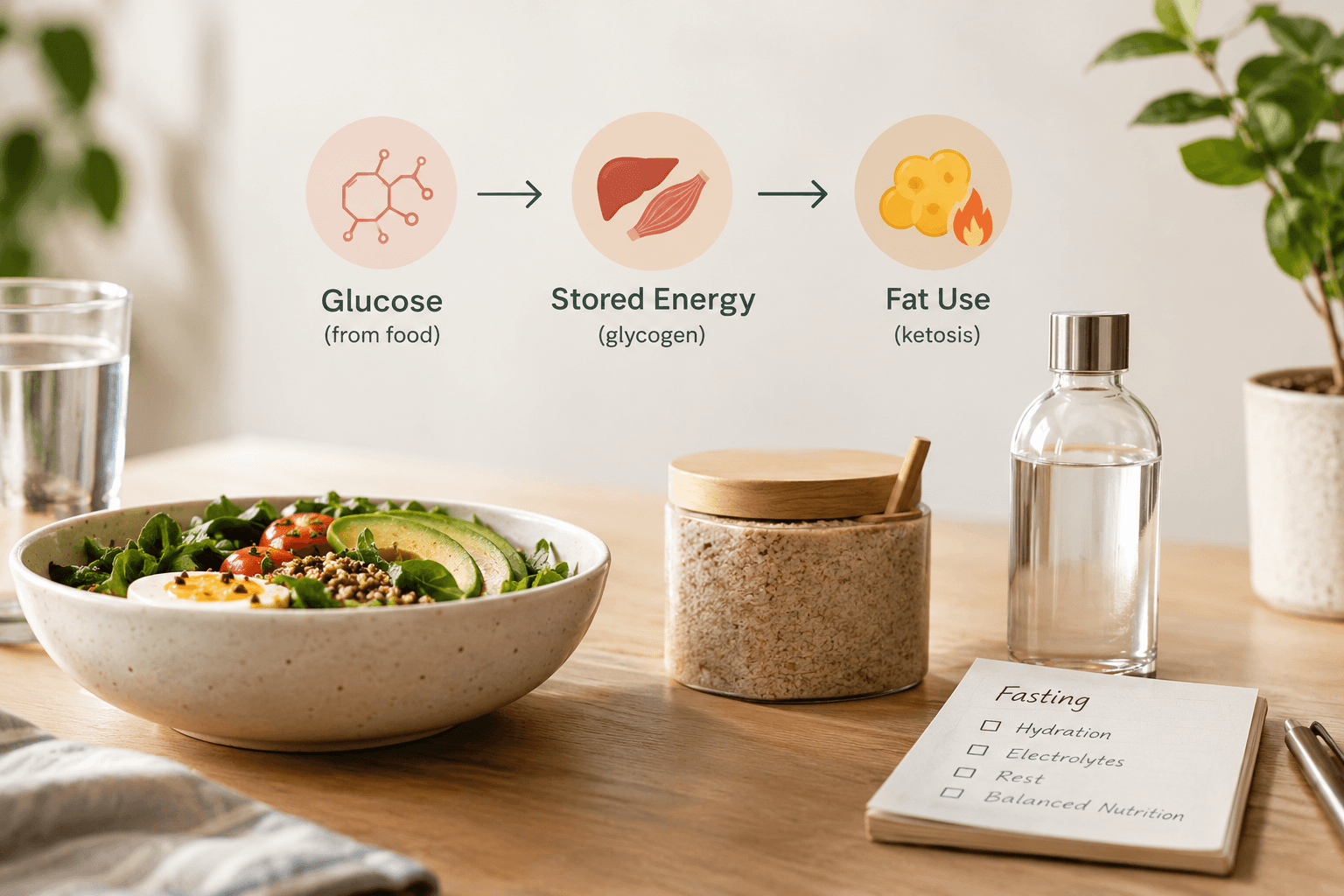
After a meal, the body primarily uses glucose from the food you have eaten for energy. Some of this glucose is stored as glycogen, mainly in the liver and muscles, for later use.
As the fasting period continues and no new food is consumed, insulin levels generally decrease and the body begins accessing these stored energy sources. Liver glycogen becomes particularly important because it helps maintain blood glucose levels between meals.
Once glycogen availability begins to decline, the body increasingly turns toward stored fat as an energy source.
From Glycogen to Fat Use
The transition is gradual rather than an instant switch.
In the early stages of fasting, the body continues using a combination of stored glycogen, fat and other energy sources. As fasting progresses, glycogen stores become less available and the contribution of fatty acids to energy production can increase.
Fat stored in adipose tissue can be broken down into fatty acids, which can then be used by various tissues for energy.
However, this does not mean that every person reaches the same level of fat utilization at the same time. Factors such as body composition, recent carbohydrate intake, physical activity, metabolic health and previous fasting experience can influence the process.
When Does Ketosis Begin?
Ketosis occurs when the body produces more ketone bodies from fat, particularly when carbohydrate availability is limited.
The timing of ketosis varies significantly between individuals. Some people may begin producing measurable ketones after a period of fasting, while others may take longer depending on their diet and metabolic state.
A person who regularly follows a lower-carbohydrate diet may enter ketosis differently from someone whose usual diet contains a larger amount of carbohydrates.
It is therefore inaccurate to claim that the body reaches a specific “fat-burning stage” at exactly the same number of fasting hours for everyone.
Does More Fat Burning Automatically Mean More Fat Loss?
Not necessarily.
Fasting can increase the body's use of stored fat for energy, but fat oxidation and long-term body-fat loss are not exactly the same thing.
Overall fat loss depends on energy balance over time, dietary intake, physical activity, metabolic factors and how the body adapts to periods of food restriction.
This is why simplified claims such as “your body starts burning fat after exactly X hours” can be misleading. Human metabolism is dynamic and does not follow a single fixed timeline.
What Can Influence the Fasting Response?
Several factors can affect how quickly the body shifts toward greater fat use and ketone production, including:
- The amount of carbohydrate consumed before fasting
- Previous fasting or low-carbohydrate eating patterns
- Physical activity and exercise
- Body composition
- Individual metabolic differences
- Duration of the fasting period
- Overall energy requirements
Two people following the same fasting schedule may therefore experience different metabolic responses.
Is Water Fasting Suitable for Everyone?
Water fasting involves consuming no calories for a period of time, which can place significant demands on the body. Longer fasts are not appropriate for everyone and may carry risks such as dehydration, dizziness, weakness, low blood sugar or electrolyte disturbances.
People with certain medical conditions, those taking medications that affect blood sugar or blood pressure, pregnant or breastfeeding individuals, and people with a history of eating disorders should seek appropriate medical guidance before considering fasting.
Fasting should not be treated as a shortcut for weight loss or as a replacement for balanced nutrition.
The Bottom Line
During fasting, the body gradually changes its fuel usage. As food-derived glucose and stored glycogen become less available, reliance on fatty acids can increase and ketone production may rise.
However, there is no universal hour-by-hour timeline for ketosis or fat burning. Your response depends on your diet, activity, metabolism and individual physiology.
Understanding these metabolic changes can help you look beyond popular fasting claims and make more informed decisions about nutrition and health.
Download the application now
- Ketosis fasting
- fat burning
- fasting metabolism
This article is for general education and is not medical advice. Please consult a qualified healthcare professional about your individual needs.