Healthy Lifestyle10 min read
Water Fasting vs Intermittent Fasting: What’s the Difference?
Water fasting and intermittent fasting are not the same. Learn how their duration, structure and eating patterns differ.
Understanding the Basics
Fasting has become a popular topic among people interested in weight management, metabolic health and healthier lifestyle habits. Two approaches that often come up in these discussions are water fasting and intermittent fasting. Although both involve periods of not eating, they differ in their structure, duration and the way they fit into everyday life.
Understanding the difference between these methods can help you make more informed decisions about your eating habits. While intermittent fasting focuses on when you eat, water fasting involves abstaining from food and drinking water during the fasting period. Neither approach is automatically suitable for everyone, and it is important to understand the potential benefits, limitations and risks before considering either one.
What Is Water Fasting?
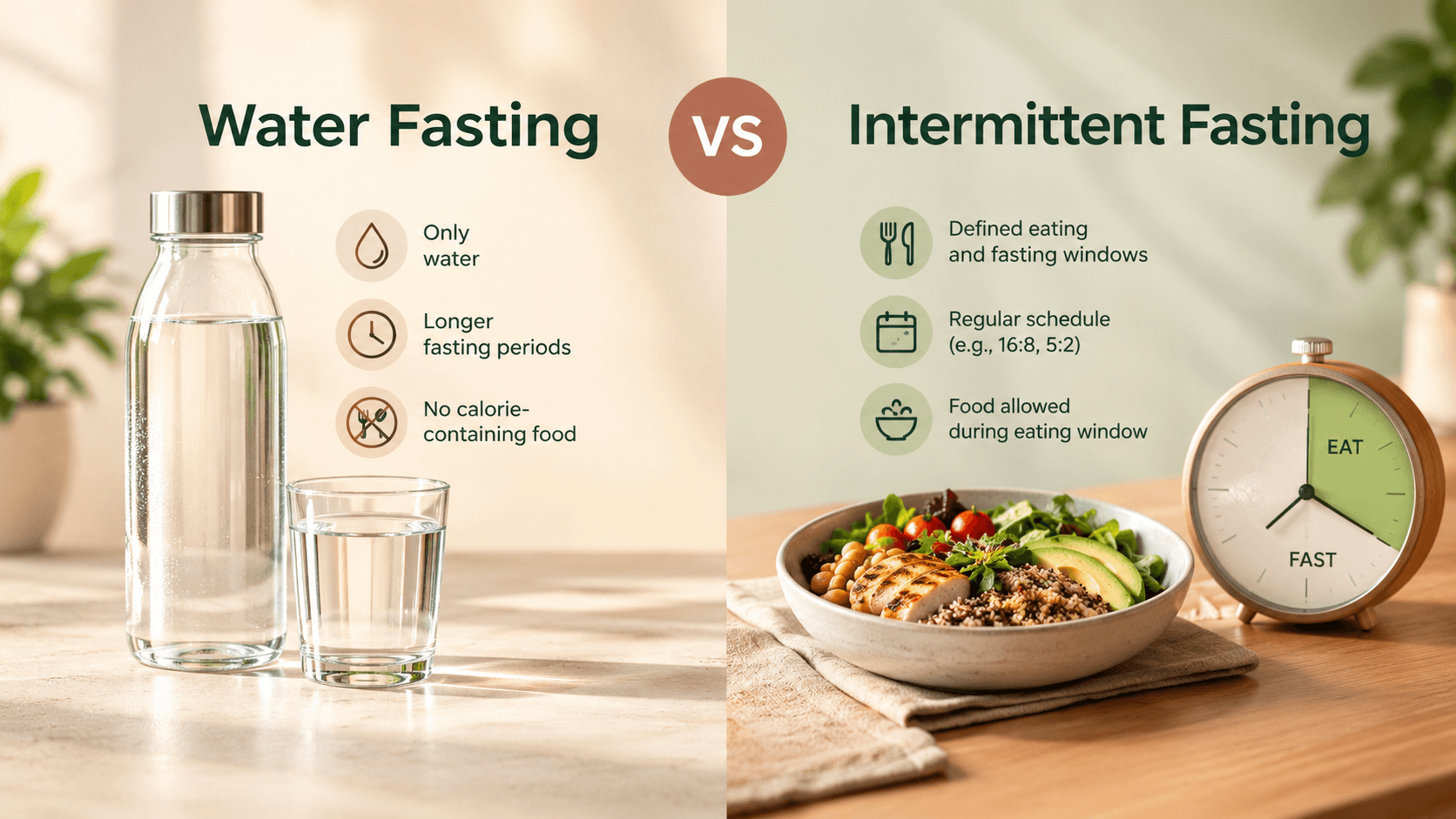
Water fasting is a practice in which a person abstains from food and consumes only water for a specified period. Depending on the approach, this may last for several hours or extend into one or more days. Unlike fasting routines that include regular eating periods throughout the day, water fasting involves a period without calorie-containing food or beverages.
During a water fast, the body continues to use energy to support essential functions. Initially, it relies significantly on readily available energy stores, including glucose and stored glycogen. As fasting continues, the body increasingly uses fat for energy and produces more ketones. However, these changes vary between individuals and depend on factors such as activity level, previous meals and metabolic health.
Some people explore water fasting because they are interested in understanding metabolism or changing their eating patterns. However, longer fasts can also cause fatigue, dizziness, headaches, dehydration or electrolyte disturbances, depending on the circumstances. Water fasting should not be viewed as a guaranteed method for weight loss or improved health.
Prolonged water fasting can be particularly risky without medical supervision. People with certain health conditions, those taking medications that affect blood glucose or blood pressure, and individuals who are pregnant or breastfeeding should seek appropriate medical advice before considering fasting.
What Is Intermittent Fasting?
Intermittent fasting (IF) is an eating pattern that alternates between defined periods of eating and fasting. Instead of necessarily avoiding food for an entire day or longer, intermittent fasting establishes specific times when meals and snacks can be consumed.
Several intermittent fasting schedules are commonly discussed:
- 12:12 method: Twelve hours of fasting followed by a 12-hour eating window.
- 14:10 method: Fourteen hours of fasting and a 10-hour eating window.
- 16:8 method: Sixteen hours of fasting and an eight-hour eating window.
- 5:2 approach: Eating regularly on five days of the week and substantially restricting calorie intake on two non-consecutive days. This is a modified fasting approach, not a continuous water fast.
During an intermittent fasting eating window, people can consume balanced meals containing vegetables, fruits, whole grains, protein sources, healthy fats and other foods that meet their nutritional needs. During the fasting window, calorie-containing foods and drinks are generally avoided, although the precise rules depend on the chosen method.
Intermittent fasting may help some people establish a more consistent meal schedule or reduce overall calorie intake. However, results vary, and it is not necessarily more effective than other sustainable eating patterns when overall energy intake and other factors are comparable.
The quality of food consumed during eating windows remains important. Fasting does not automatically compensate for an unbalanced diet, inadequate protein intake or insufficient vitamins and minerals.
Water Fasting vs Intermittent Fasting: Key Differences
Although both methods involve periods without food, their practical application is different.
| Feature | Water Fasting | Intermittent Fasting |
| Basic approach | Abstaining from food and consuming only water | Alternating between fasting and eating windows |
| Typical structure | A defined period without food; duration varies | A recurring daily or weekly schedule |
| Eating during the fasting period | No food is consumed | Food is consumed during the designated eating window |
| Meal schedule | Meals are paused during the fast | Meals are planned around the eating window |
| Nutrient intake | No nutrients are supplied by food during the fast | Nutrients can be obtained during eating periods |
| Daily routine | May be difficult to maintain during longer fasts | Can sometimes be incorporated into a regular routine |
| Potential concerns | Dehydration, electrolyte disturbances, dizziness and other complications | Hunger, fatigue, inadequate nutrient intake or difficulty maintaining the schedule |
| Suitability | Requires careful consideration, especially for prolonged fasting | Depends on individual health, nutritional needs and lifestyle |
The most important distinction is that intermittent fasting is generally a recurring schedule that includes eating periods, whereas water fasting is a period of complete food abstinence in which only water is consumed.
How Do Water Fasting and Intermittent Fasting Affect the Body?
Both approaches can influence how the body obtains and uses energy, but the effects depend on the length of the fast, the person's health and their overall eating habits.
1. Energy Use and Metabolism
After a meal, the body uses nutrients from food to meet its energy needs and replenish its stores. During fasting, insulin levels generally decrease, and the body gradually relies more on stored energy.
In shorter fasting periods, the body uses a combination of available glucose, glycogen and fat. With longer fasting periods, fat breakdown and ketone production generally increase. The timing and extent of these changes vary from person to person.
Neither water fasting nor intermittent fasting guarantees a particular metabolic outcome. Claims about rapid fat burning or dramatic metabolic improvements should be considered carefully.
2. Weight Management
Some people experience weight loss with fasting because they consume fewer calories overall. However, weight changes depend on total energy intake, physical activity, sleep, dietary quality and other individual factors.
Water fasting may lead to a quick drop on the weighing scale, but some early weight loss comes from changes in glycogen stores and associated water rather than body fat alone. Some of this weight may return when normal eating resumes.
Intermittent fasting may help people manage their eating schedules, but it does not guarantee weight loss. Eating excessive calories during the eating window can offset the effect of the fasting period.
A sustainable eating pattern that provides adequate nutrition is generally more useful for long-term weight management than relying on increasingly long periods without food.
3. Hunger, Energy and Concentration
Hunger can occur with either approach, particularly when someone is adjusting to a new eating schedule. Some people report that their hunger becomes more manageable over time, while others experience persistent discomfort, irritability or difficulty concentrating.
Longer water fasts can be especially challenging because there are no meals to provide energy or nutrients during the fasting period. Intermittent fasting may offer greater flexibility because meals can be planned around work, study, exercise and other daily activities.
If fasting causes significant weakness, faintness, confusion or other concerning symptoms, it should not be pushed through. Medical advice may be necessary.
4. Nutritional Adequacy
Nutrition is an important consideration when comparing the two approaches. During water fasting, the body does not receive protein, essential fats, vitamins or minerals from food. The potential nutritional impact becomes more concerning as the fast continues.
With intermittent fasting, a person can obtain essential nutrients during eating periods, provided their meals are balanced and sufficient. However, a very short eating window can make it difficult to consume enough food, particularly for people with higher nutritional requirements.
Regardless of the fasting method, adequate hydration, nutrient intake and a sustainable approach to eating remain essential.
Potential Benefits and Limitations
Both fasting approaches have limitations, and neither should be treated as a universal health solution.
Potential benefits of intermittent fasting:
- May provide a structured eating schedule.
- May help some individuals reduce unplanned snacking.
- Can support weight management when it helps create a sustainable calorie deficit.
- Allows regular opportunities to consume balanced meals.
Limitations of intermittent fasting:
- May cause hunger, headaches, fatigue or irritability.
- Can make social meals and certain work schedules more difficult.
- May lead to inadequate nutrition if the eating window is too restrictive.
- Is not necessarily more effective than other balanced approaches to weight management.
Potential effects and limitations of water fasting:
- Provides a period without food intake and may lead to short-term changes in energy use.
- Can cause rapid changes in body weight, much of which may initially reflect water and glycogen loss.
- May cause dehydration, electrolyte imbalances, low blood pressure or low blood glucose in susceptible individuals.
- Can make it difficult to meet nutritional needs and may be unsafe when prolonged or undertaken without appropriate supervision.
It is important to distinguish between a physiological change and a proven long-term health benefit. A change in ketone production, for example, does not by itself demonstrate that a fasting routine is beneficial or appropriate for a particular person.
Who Should Be Careful About Fasting?
Fasting is not appropriate for everyone. Medical guidance is especially important for people who:
- Have diabetes or take medication that can cause low blood glucose.
- Have a history of eating disorders or a difficult relationship with food.
- Are pregnant or breastfeeding.
- Are underweight or at risk of malnutrition.
- Have kidney, liver or other medical conditions that may affect fluid balance or nutritional needs.
- Take medicines that must be taken with food or that affect blood pressure, blood glucose or electrolyte balance.
Children and adolescents who are still growing should not undertake restrictive fasting routines without appropriate specialist guidance.
People with medical conditions should consult a qualified healthcare professional before making substantial changes to their eating patterns. Medication doses should not be changed or skipped to accommodate a fasting schedule without advice from the prescribing professional.
How to Make an Informed Choice
Choosing an eating pattern requires more than comparing the number of hours spent fasting. It is important to consider personal health, nutritional requirements, daily routines and long-term goals.
Here are a few practical points to consider:
1. Identify your goal. Think about whether you want to establish a regular meal schedule, improve dietary consistency or manage your weight. Fasting is only one possible approach to these goals.
2. Consider your daily routine. Work schedules, exercise, sleep and family meals can all affect how practical an eating pattern will be.
3. Prioritise balanced nutrition. Include appropriate sources of protein, fibre, healthy fats, vitamins and minerals in your regular meals.
4. Avoid extreme approaches. Longer fasting periods are not automatically better. Avoid extending a fast simply because you believe it will produce faster results.
5. Pay attention to how you feel. Persistent dizziness, weakness, fainting or other concerning symptoms should not be ignored.
6. Seek professional guidance when needed. A qualified dietitian or healthcare professional can help assess your nutritional requirements and identify an appropriate approach based on your circumstances.
Frequently Asked Questions
Is water fasting the same as intermittent fasting?
No. Water fasting involves abstaining from food and consuming only water during the fasting period. Intermittent fasting alternates between designated fasting and eating periods, allowing regular meals within the eating window.
Which fasting method is better for weight loss?
Neither method is universally better. Weight loss depends on factors including total calorie intake, physical activity, dietary quality, sleep and individual health. Water fasting can produce rapid short-term scale changes, but these may include water loss. Intermittent fasting may help some people manage their eating habits, but results vary.
Can you drink coffee during water fasting?
Strict water fasting permits only water, so coffee is not included. Some intermittent fasting schedules allow plain, unsweetened coffee or tea during fasting periods, but the rules depend on the particular approach and its purpose.
Does intermittent fasting mean skipping breakfast?
Not necessarily. Some people choose an eating window that includes breakfast, while others start eating later in the day. Intermittent fasting is defined by the timing of eating and fasting periods rather than by a requirement to skip a specific meal.
Is a longer fast always more effective?
No. Longer fasting periods can increase the risk of complications and are not guaranteed to provide better long-term results. The suitability of fasting depends on individual health and circumstances, and prolonged water fasting should not be undertaken without appropriate medical supervision.
Can beginners try water fasting?
Water fasting is not automatically safe for beginners. Even a relatively short fast may be unsuitable for some people, depending on their health conditions, medications and nutritional needs. Anyone considering fasting should assess the risks and seek medical guidance when appropriate.
Conclusion
Water fasting and intermittent fasting both involve periods without food, but they differ considerably in structure and practical application. Water fasting excludes food for a defined period, while intermittent fasting uses scheduled fasting and eating windows.
Neither method guarantees weight loss, improved metabolism or better overall health. Individual responses vary, and both approaches have potential limitations. For many people, consistent, balanced nutrition, adequate sleep, regular physical activity and sustainable habits are important foundations of long-term health.
Before starting a fasting routine, consider your health status, nutritional requirements and lifestyle. If you have a medical condition, take medication or are considering a prolonged fast, consult a qualified healthcare professional to determine what is appropriate for you.
Download the application now
https://paybycal.com/download.html
- water fasting vs intermittent fasting
- fasting comparison
This article is for general education and is not medical advice. Please consult a qualified healthcare professional about your individual needs.