
Healthy Lifestyle3 min read
Why Tracking Your Food, Fasting, Steps and Body Measurements Can Improve Consistency
Tracking helps turn everyday health habits into measurable progress. Discover how PayByCal keeps your routine organized in one place.
Why Tracking Your Food, Fasting, Steps and Body Measurements Can Improve Consistency
Small Habits Can Lead to Meaningful Progress
Building a healthier lifestyle does not always require major changes overnight. Often, progress begins with small, manageable habits that you can follow consistently. Paying attention to your meals, monitoring your fasting routine, staying active throughout the day and recording body measurements can help you better understand your overall lifestyle.
However, managing all these habits separately can sometimes feel overwhelming. You may remember what you ate yesterday but forget how many steps you walked, when you started fasting or whether your body measurements have changed over the past few weeks.
This is where health tracking becomes useful.
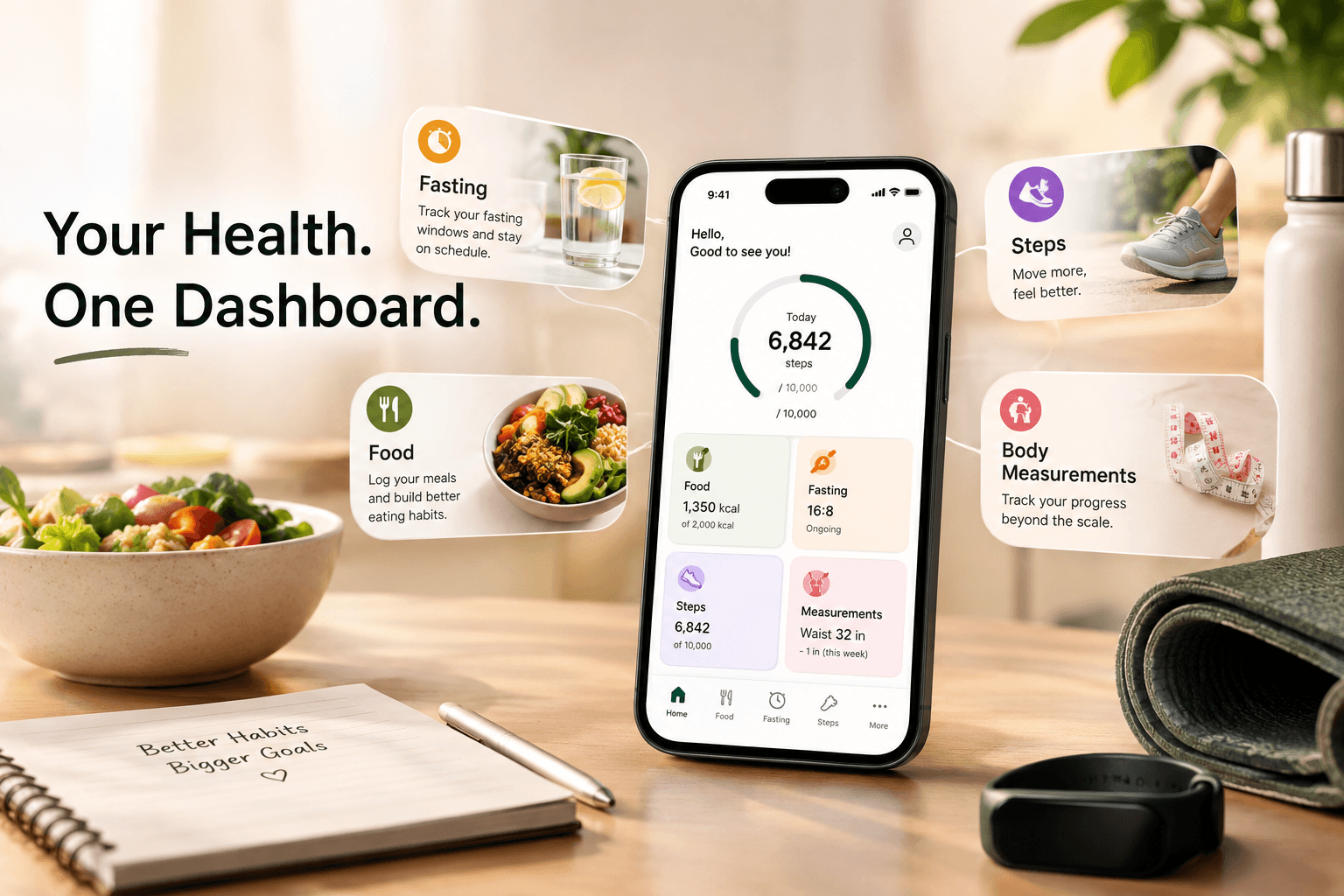
With PayByCal, you can bring important parts of your daily health routine together in one place. Instead of relying entirely on memory, you can use organized records to review your habits, recognize patterns and make more informed decisions about your routine.
1. Track Your Food to Understand Your Eating Habits
Food plays an important role in your daily energy, nutrition and overall well-being. Yet, it can be easy to overlook small snacks, irregular meal timings or changes in portion sizes when you depend only on memory.
Tracking your food can help you become more aware of what you eat and how your eating habits change over time.
By recording your meals consistently, you can review your daily food choices, identify recurring patterns and better understand whether your routine aligns with your personal goals. It may also help you notice habits such as skipping meals, eating at inconsistent times or frequently choosing foods that do not support your nutritional needs.
A food tracker can make this process more organized by keeping your meal records accessible when you need to review them.
The goal is not to judge every food choice. Instead, it is to develop awareness and create a routine that feels practical, balanced and sustainable.
2. Monitor Your Fasting Routine More Easily
Fasting is a structured eating pattern that involves alternating between periods of eating and not eating. People may follow different fasting schedules depending on their preferences, lifestyle and individual circumstances.
Keeping track of fasting start times, end times and overall duration can become confusing when you try to remember everything manually.
A fasting tracker helps organize this information and makes it easier to review your routine. By recording your fasting sessions, you can understand how regularly you follow your chosen schedule and identify patterns in your consistency.
With PayByCal, you can keep your fasting routine organized alongside other aspects of your health journey, helping you maintain a clearer picture of your daily habits.
Remember that fasting is not suitable for everyone. Your health, nutritional needs and personal circumstances should always come first. Consult a qualified healthcare professional before starting a fasting routine, especially if you have an existing medical condition or take medication.
3. Track Your Daily Steps and Stay Active
Physical activity is another important part of a balanced lifestyle. You do not always need an intense workout to become more active. Walking during breaks, taking the stairs, going for an evening walk or moving around more frequently throughout the day can all contribute to your activity levels.
A step tracker helps make everyday movement easier to monitor.
When you record your daily steps, you can compare your activity across different days, recognize when you are less active and set realistic goals that fit your schedule.
For example, if you notice that you walk less on busy workdays, you might decide to include a short walk during lunch or take a few movement breaks throughout the day.
Over time, reviewing your activity records can help you understand your routine and encourage you to build more consistent movement habits.
Rather than focusing only on reaching a particular number, pay attention to gradual improvements and choose activity goals that are appropriate for your fitness level.
4. Record Body Measurements to Understand Your Progress
Health progress is not always reflected by body weight alone. Depending on your personal goals, changes in waist circumference, hip measurements or other body measurements may also provide useful information.
Recording measurements periodically gives you a reference point that you can compare with your previous records.
For more meaningful comparisons, try to measure under similar conditions each time. For example, use the same measuring technique and take measurements at a consistent time of day when practical.
It is also important to avoid placing too much importance on short-term changes. Body measurements can fluctuate
Visit the link for more details
- Health tracking app
- fasting tracker
- step tracker
- diet app
- PayByCal app
This article is for general education and is not medical advice. Please consult a qualified healthcare professional about your individual needs.