Healthy Lifestyle9 min read
World Vegan Month 2026: A Practical Indian Vegan Diet Guide for Protein, B12, Iron & Calcium
November is World Vegan Month, making it the perfect time to understand how to follow a balanced plant-based diet. From protein-rich dals and soy foods to vitamin B12, iron, calcium and omega-3, discover how to meet your nutritional needs with practical Indian food choices. Learn how to build balanced vegan meals, avoid common nutritional mistakes and plan a healthier everyday diet.
World Vegan Month 2026: A Practical Indian Vegan Diet Guide for Protein, B12, Iron & Calcium
November is celebrated as World Vegan Month, bringing attention to plant-based eating, animal welfare and the importance of making informed food choices. Over the years, vegan diets have gained popularity among people who want to explore healthier eating habits, reduce their environmental impact or follow an entirely plant-based lifestyle.
In India, adopting a vegan diet can be easier than many people imagine. Our traditional food culture already includes several plant-based ingredients, such as dals, pulses, millets, vegetables, fruits, nuts, seeds and whole grains. However, following a vegan diet is not simply about removing milk, curd, paneer, eggs and other animal-based foods. It also requires understanding how to meet your daily nutritional requirements through appropriate food combinations and reliable fortified foods or supplements.
A well-planned vegan diet can provide a variety of essential nutrients. However, nutrients such as vitamin B12, calcium, iron, omega-3 fatty acids and protein need particular attention.
This guide explains how to build a balanced Indian vegan diet using familiar ingredients and practical meal choices.
1. What Is a Vegan Diet?
A vegan diet completely excludes foods obtained from animals. This means avoiding meat, fish, poultry, eggs, milk, curd, paneer, butter, ghee, cheese and other animal-derived ingredients.
Instead, the diet focuses on plant-based food sources, including:
- Pulses and legumes: Dal, rajma, chickpeas, black chana and green gram.
- Soy products: Tofu, soy chunks, soy milk and other soy-based foods.
- Whole grains: Brown rice, oats, whole wheat, jowar, bajra and ragi.
- Vegetables: Spinach, broccoli, carrots, beans, cauliflower and seasonal vegetables.
- Fruits: Guava, oranges, papaya, apples, bananas and berries.
- Nuts and seeds: Almonds, walnuts, chia seeds, flaxseeds, pumpkin seeds and sesame seeds.
- Plant-based alternatives: Fortified soy milk, oat milk and other suitable dairy alternatives.
The key is variety. Eating only salads, fruits or vegetables does not automatically make a diet nutritionally balanced. A healthy vegan eating pattern should include adequate protein, carbohydrates, healthy fats, vitamins and minerals.
2. Protein: How Can Vegans Meet Their Daily Requirements?
Protein is essential for muscle maintenance, tissue repair, enzyme production and several important body functions. One common misconception about vegan diets is that plant foods cannot provide sufficient protein.
In reality, India has several affordable plant-based protein options that can be included in everyday meals.
Good Indian vegan protein sources include:
- Soy chunks and soy granules
- Tofu
- Rajma and chickpeas
- Moong, masoor and toor dal
- Black chana
- Besan
- Peanuts and peanut butter
- Sattu
- Pumpkin and hemp seeds
For example, a person can include moong dal chilla for breakfast, rajma with rice for lunch, roasted chana as a snack and tofu with vegetables for dinner.
Soy foods are particularly useful because they provide concentrated plant protein. Combining different protein-rich foods throughout the day also helps create a varied amino acid intake.
Practical tip: Do not depend entirely on vegetables or small portions of dal to meet protein needs. Include a meaningful protein source in every major meal. Individual protein requirements depend on age, body weight, physical activity, health status and personal goals.
3. Vitamin B12: One Nutrient Vegans Should Never Ignore
Vitamin B12 is important for healthy red blood cell formation, DNA production and normal nervous system function.
It is one of the most important nutrients to monitor when following a strict vegan diet because unfortified plant foods are not reliable natural sources of vitamin B12.
Some products that may provide vitamin B12 include:
- Fortified soy milk
- Fortified plant-based beverages
- Vitamin B12-fortified breakfast cereals
- Fortified nutritional yeast
- Vitamin B12 supplements
It is important to understand that ordinary nutritional yeast, fruits, vegetables, fermented foods and plant-based milk do not automatically contain vitamin B12. Always check the product's nutritional label to confirm fortification.
A person following a strict vegan diet should have a reliable vitamin B12 source through appropriately fortified foods or supplementation. The right supplement schedule and dose should be discussed with a qualified healthcare professional or dietitian.
Why does it matter?
Inadequate vitamin B12 intake over time can contribute to anaemia, tiredness, weakness and neurological problems. Therefore, it should never be treated as an optional nutrient in a long-term vegan diet.
4. Iron: Build Better Meals with the Right Food Combinations
Iron plays an important role in haemoglobin production, which helps transport oxygen throughout the body.
Plant foods contain non-haem iron. However, the body generally absorbs this form less efficiently than the haem iron found in animal foods.
Fortunately, several familiar Indian foods provide plant-based iron.
Good vegan iron sources include:
- Spinach and other green leafy vegetables
- Black chana
- Rajma
- Lentils and dals
- Sesame seeds
- Pumpkin seeds
- Ragi
- Soybeans
- Dried apricots and raisins
One useful strategy is to combine iron-rich foods with vitamin C-rich ingredients.
For example:
- Add lemon juice to chana or dal.
- Combine rajma with a fresh tomato salad.
- Eat guava or amla with an iron-rich meal.
- Add capsicum to tofu and vegetable preparations.
Vitamin C improves the absorption of non-haem iron.
Another useful habit is to avoid tea or coffee immediately around iron-rich meals, as compounds in these beverages can reduce iron absorption.
People with suspected iron deficiency should not start iron supplements without appropriate assessment. Their dietary intake, symptoms and laboratory results should be evaluated by a healthcare professional.
5. Calcium: Supporting Strong Bones Without Dairy Products
Many people associate calcium primarily with milk, curd and paneer. However, a vegan diet can also include several calcium-containing foods.
Calcium is essential for bone and dental health, muscle contraction and normal nerve function.
Plant-based calcium sources include:
- Ragi (finger millet)
- Sesame seeds (til)
- Calcium-set tofu
- Fortified soy milk
- Fortified plant-based yoghurt
- Almonds
- Certain green vegetables, such as broccoli and bok choy
Ragi is particularly useful in Indian kitchens because it can be prepared in different ways.
You can include it through:
- Ragi dosa
- Ragi roti
- Ragi porridge
- Ragi-based chilla
Sesame seeds can also be added to chutneys, vegetable preparations and homemade seed mixtures.
When purchasing plant-based milk, check whether calcium has been added. Not every almond, oat or soy beverage contains the same amount of calcium. Also, some vegetables contain compounds that reduce calcium absorption, so choosing a variety of sources is important.
6. Omega-3 Fatty Acids: Include Healthy Fats in Your Diet
Omega-3 fatty acids are essential fats that support several important functions in the body, including cardiovascular and brain health.
Common vegan sources of alpha-linolenic acid (ALA), a plant-based omega-3 fatty acid, include:
- Flaxseeds
- Chia seeds
- Walnuts
- Hemp seeds
- Flaxseed oil
A simple way to include these foods is to add ground flaxseeds to porridge, sprinkle chia seeds over fruit or include walnuts as part of your daily snack.
It is important to remember that ALA is not the same as the long-chain omega-3 fatty acids EPA and DHA. The body's conversion of ALA into EPA and DHA is limited. People who need a direct vegan source of EPA and DHA can discuss algae-based omega-3 supplements with a qualified professional.
7. What Does a Balanced Indian Vegan Plate Look Like?
A balanced vegan meal should contain a combination of protein, carbohydrates, vegetables, healthy fats and other nutrient-rich foods.
Instead of focusing on one superfood, aim to create meals that include different food groups.
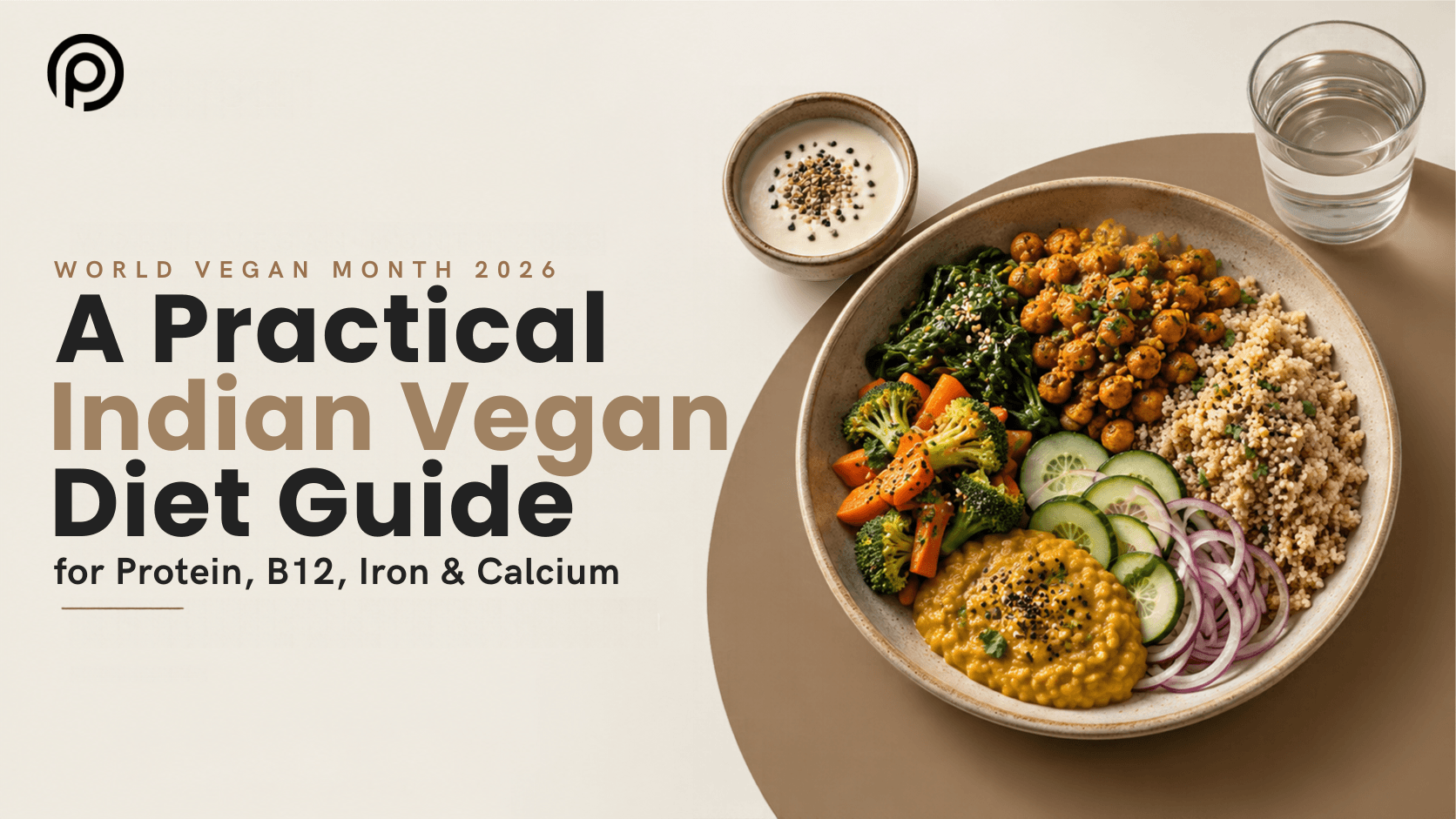
A practical Indian vegan plate can include:
- Vegetables: Seasonal sabzi, spinach, beans, carrots or broccoli.
- Protein: Dal, rajma, chana, tofu or soy chunks.
- Carbohydrates: Roti, brown rice, millet or other whole grains.
- Healthy fats: Nuts, seeds or small amounts of suitable cooking oils.
- Additional nutrients: Fruit, lemon, fortified plant milk or other suitable fortified foods.
For example, a lunch consisting of rajma, brown rice, cucumber-tomato salad and lemon provides a combination of protein, carbohydrates, fibre and plant-based micronutrients.
The exact portions should depend on an individual's nutritional requirements, activity levels and health goals.
8. Sample Indian Vegan Meal Plan for One Day
Here is a simple example of how an Indian vegan diet can be organised throughout the day.
Early Morning
- A glass of water
- A small portion of soaked almonds or walnuts
Breakfast
- Moong dal chilla with mint chutney
- One seasonal fruit
Mid-Morning Snack
- Guava, orange or papaya
- A handful of roasted chana
Lunch
- Two whole-wheat rotis
- One bowl of rajma or chana
- Seasonal vegetable sabzi
- Fresh salad with lemon
Evening Snack
- Roasted makhana or peanuts
- Fortified soy milk, if suitable
Dinner
- Tofu and mixed vegetable stir-fry
- One or two millet rotis
- A bowl of dal or another suitable protein-rich preparation
Before Bed (Optional)
- Unsweetened fortified plant-based milk, if required and suitable.
This is an illustrative meal pattern, not an individualised diet prescription. Food quantities, calorie intake and nutrient requirements should be adjusted according to the person's age, body weight, activity level, health status and nutritional goals.
9. Common Mistakes to Avoid When Following a Vegan Diet
Switching to a vegan lifestyle without proper planning can lead to nutritional gaps. Here are some common mistakes to avoid.
1. Depending only on fruits and salads
Fruits and salads provide valuable nutrients, but they cannot replace adequate protein, healthy fats and other essential food groups.
2. Ignoring vitamin B12
This is one of the biggest nutritional mistakes among strict vegans. A reliable fortified food or supplement source is essential.
3. Not consuming enough protein
Eating plant-based foods does not automatically mean your protein requirements are being met. Include dal, beans, soy foods, tofu and other protein sources regularly.
4. Assuming every plant-based milk is nutritious
Some plant-based beverages are low in protein and may not contain added calcium or vitamin B12. Always read the nutrition label.
5. Forgetting healthy fats
Completely avoiding fats is not a healthy approach. Include suitable nuts, seeds and oils in appropriate quantities.
6. Following someone else's meal plan
Nutritional requirements differ from person to person. A meal plan that works for one individual may not be appropriate for another.
10. Is a Vegan Diet Suitable for Everyone?
A well-planned vegan diet can be suitable for many healthy adults. However, different life stages and health conditions require additional nutritional attention.
Pregnant and breastfeeding women, children, adolescents, older adults and people with existing health conditions may have specific nutritional requirements.
For these groups, a vegan diet should be planned with appropriate professional guidance to ensure sufficient energy, protein, vitamin B12, iron, calcium, vitamin D, iodine and other essential nutrients.
If someone is experiencing persistent fatigue, weakness, unexplained weight changes or other health concerns, they should seek professional assessment rather than assuming that changing their diet alone will resolve the problem.
Conclusion: Make Your Vegan Diet Balanced, Not Just Plant-Based
World Vegan Month is a great opportunity to explore plant-based nutrition and understand how food choices influence overall health.
India offers a wide variety of vegan-friendly ingredients, from dals and pulses to millets, nuts, seeds, tofu and seasonal vegetables. With thoughtful meal planning, these foods can form the foundation of a balanced and satisfying eating pattern.
However, simply removing animal products is not enough. Paying attention to protein, vitamin B12, iron, calcium and omega-3 fatty acids is equally important.
The best approach is to focus on variety, nutritional balance and individual requirements instead of following restrictive food trends or copying someone else's diet.
Want to understand how to build a nutritionally balanced diet for your lifestyle?
Download the PaybyCal app or book a nutrition consultation to get professional guidance from a dietitian. Make informed food choices and build a nutrition routine that supports your individual health goals.
Your diet should not just follow a trend. It should meet your nutritional needs.
Download the application now
https://paybycal.com/download.html
- indian vegan diet
- vegan protein sources india
- vitamin b12 vegan diet
- vegan calcium foods
- plant based nutrition
- vegan iron sources
- omega 3 vegan foods
- balanced vegan diet
- vegan meal plan india
This article is for general education and is not medical advice. Please consult a qualified healthcare professional about your individual needs.